
Projects / Vintage Inspiration / Geometric Patterns in The Grammar of Ornament
Geometric Patterns in The Grammar of Ornament
Owen Jones (1809 - 1874) was an influential English
designer, theorist, and architect. In The
Grammar of Ornament (1856), Jones attempts
to "set out to reacquaint his colleagues with
the underlying principles that made art beautiful,"
according to
Femke Speelberg and Robyn Fleming.
In other words, he wanted to explore the universal
laws that made something beautiful, no matter the
culture of the artists. Some of his studies were drawn from
his travels, but many were taken after items
in British museums and collections.
The book, still in
print today, includes more than one hundred
multi-color plates of designs from different
cultures. At the time, images were reproduced
using a technique called chromolithography.
Every color in a reproduced image would've been
made with a separate plate, lined up and pressed
onto the paper, and Jones was remarkable for
pushing the technique and his printmaking team
to use as many as twenty lithographic plates per
image. (For the book nerds, these plates
begin to degrade with multiple printings.
This is why first editions were so valuable --
their images were sharpest.)
The Grammar of Ornament was also notable for
Jones' assertion that beauty from all cultures
has its basis in the forms of nature. He asserts
that progress in ornamental art adn design comes
not from rejecting the past nor following it blindly,
but from returning to nature for "fresh inspiration"
and applying those teachings to our knowledge of the
past. Because of this emphasis on the importance of
nature, he includes several plates of designs taken
directly from botanical forms.
-
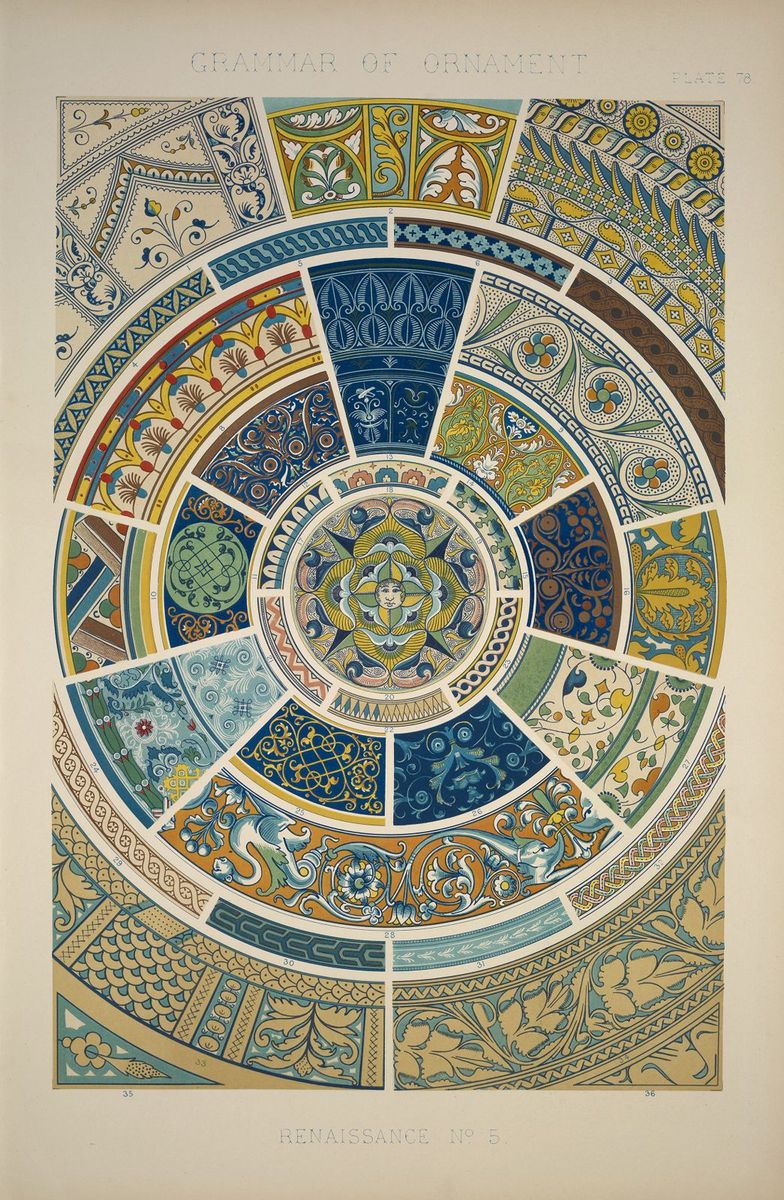
Renaissance Ornament no. 5: Ornaments from pottery at Marlborough House. Lithograph, 1856. The New York Public Library -
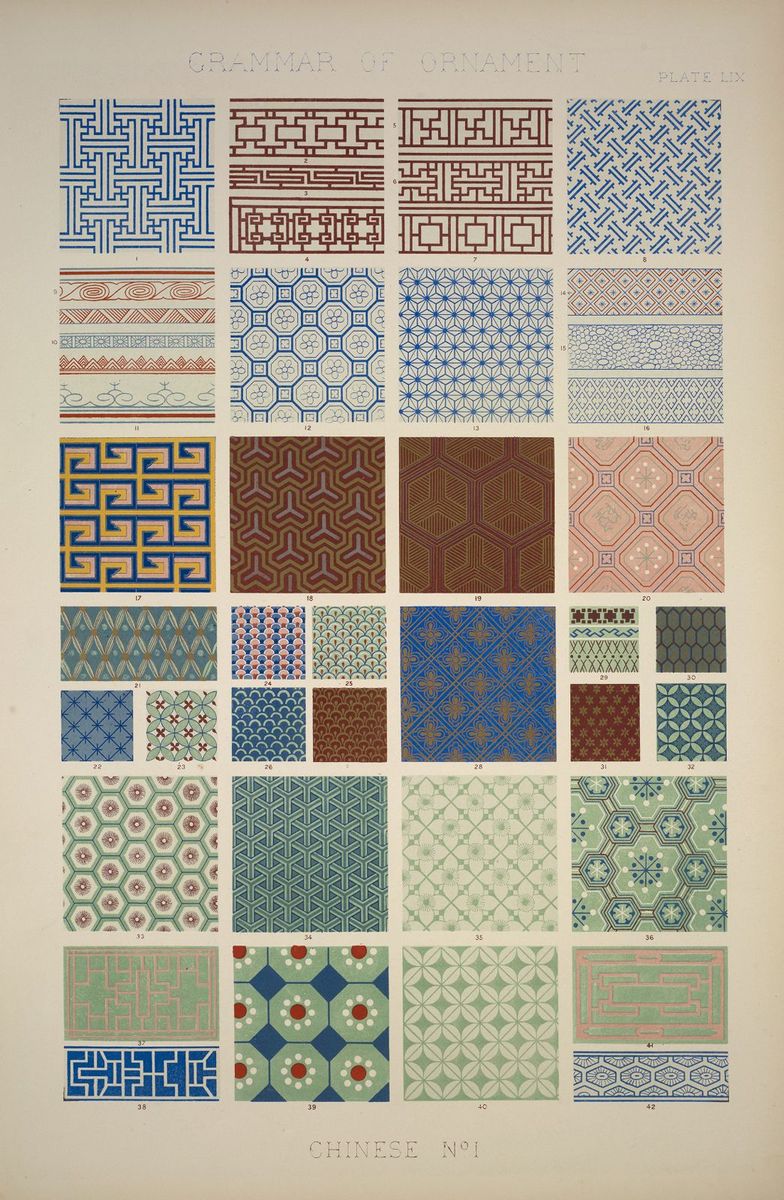
Chinese Ornament no. 1: Ornaments painted on porcelain and wood from woven fabrics. Lithograph, 1856. The New York Public Library -
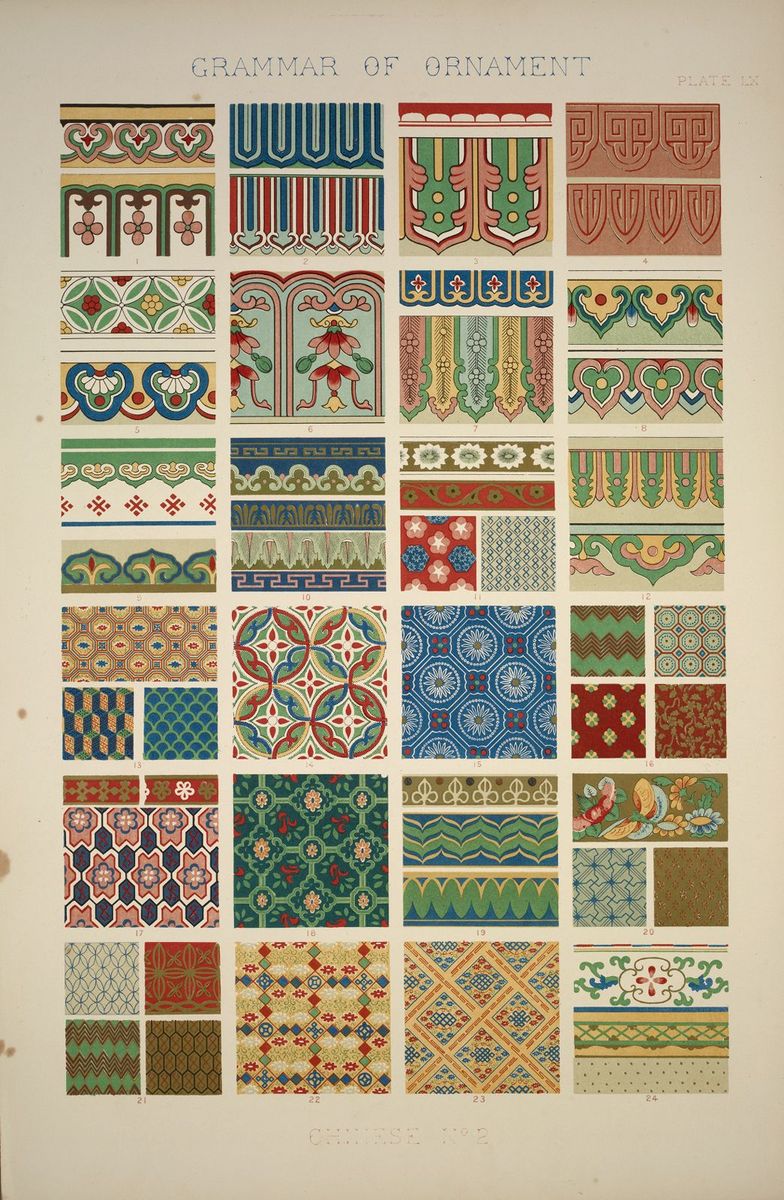
Chinese Ornament no. 2: Ornaments painted on porcelain and wood from woven fabrics. Lithograph, 1856. The New York Public Library -
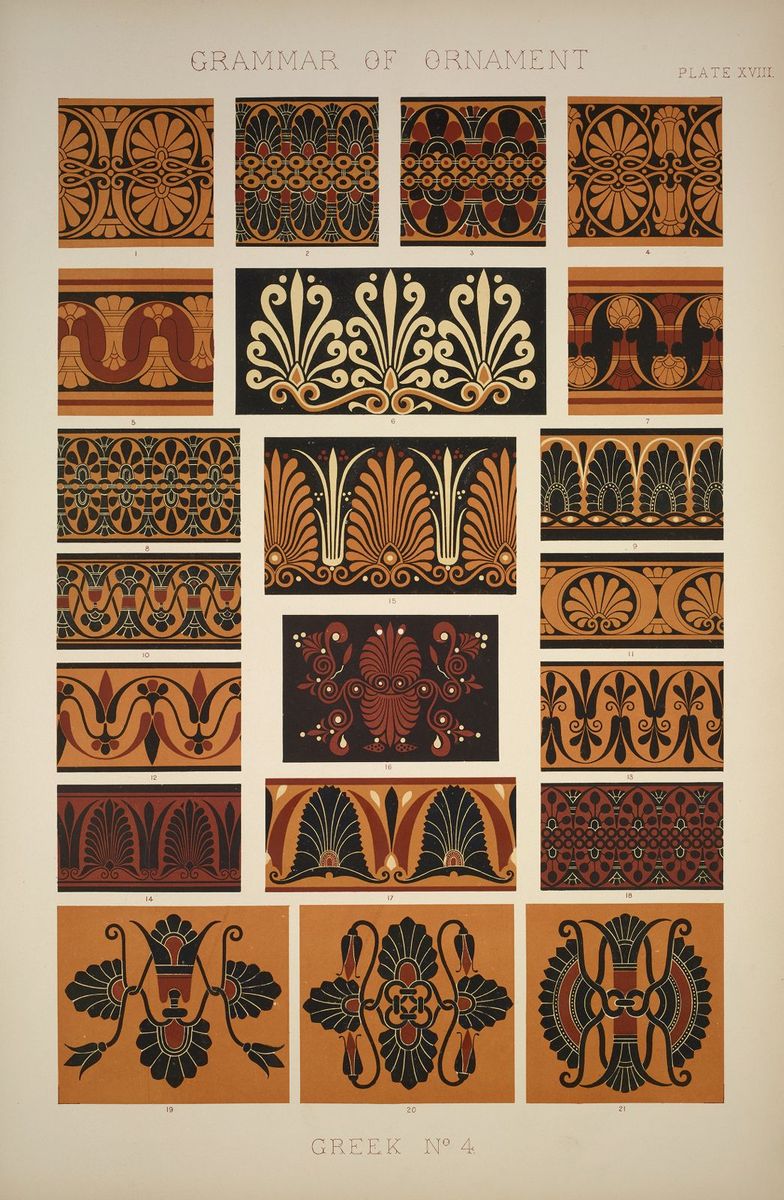
Greek no. 4: Ornaments from Greek and Etruscan vases in the British Museum and the Louvre, Lithograph, 1856. The New York Public Library -
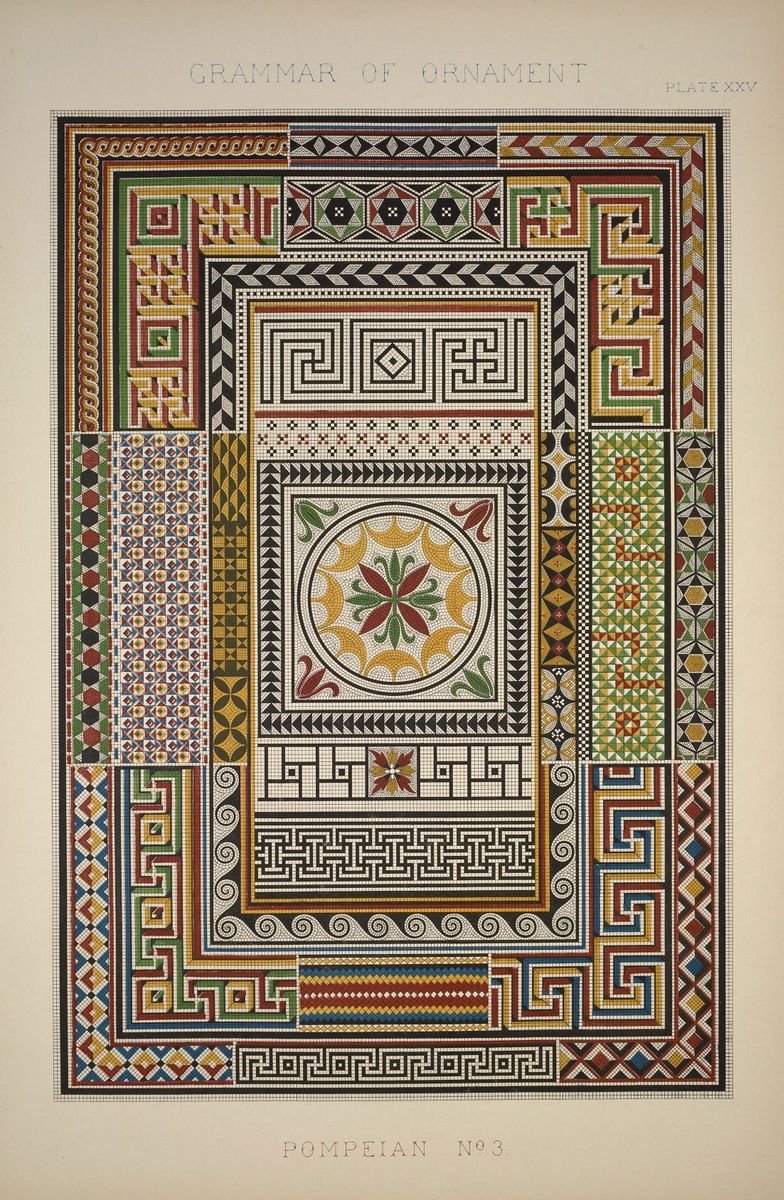
Pompeian no. 3: Mosaics from Pompeii and the museum at Naples. Lithograph, 1856. The New York Public Library -
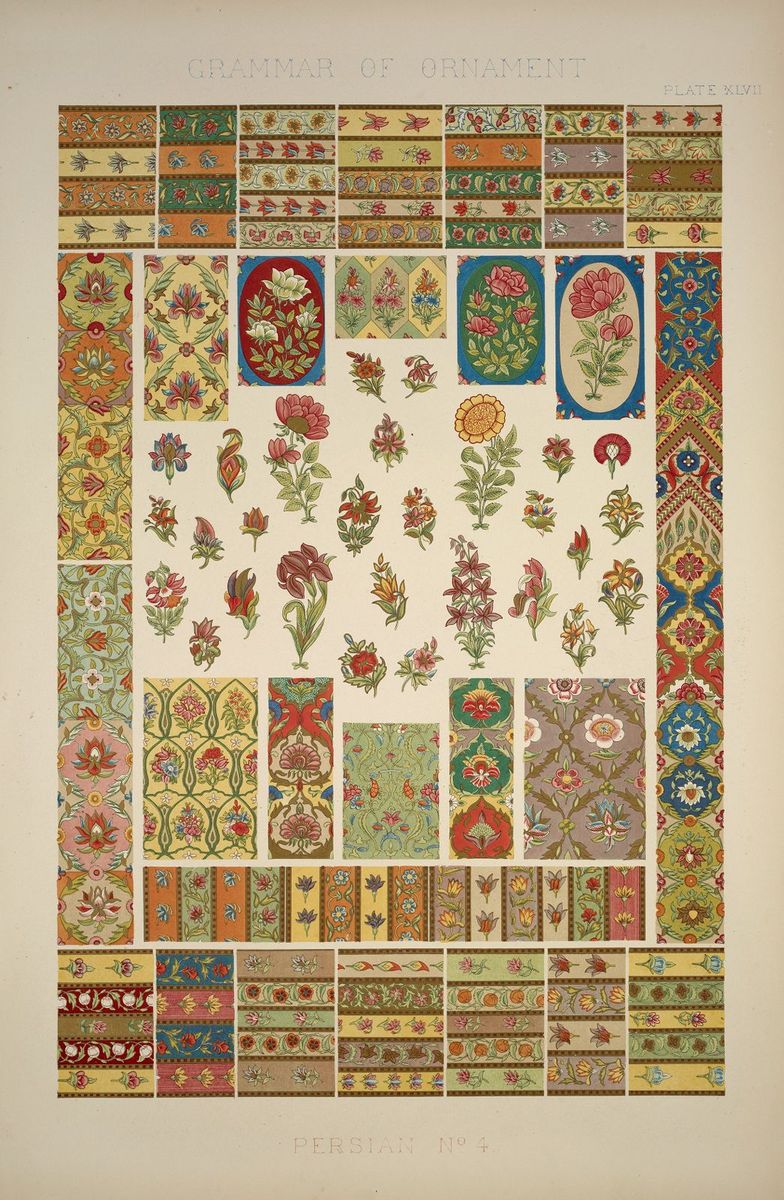
Persian Ornament no. 4: From a Persian manufacturer's pattern book, Marlborough House, Lithograph, 1856. The New York Public Library -
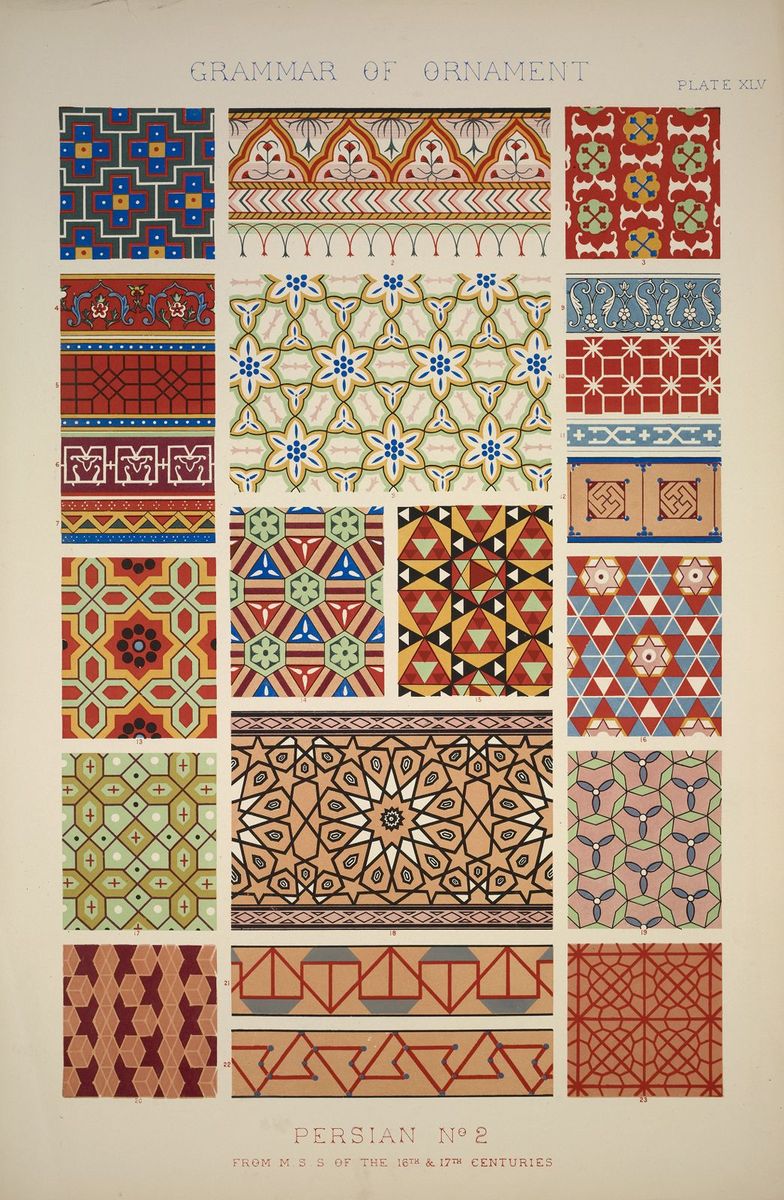
Persian Ornament no. 2: Ornaments from Persian manuscript in the British Museum. Lithograph, 1856. The New York Public Library -
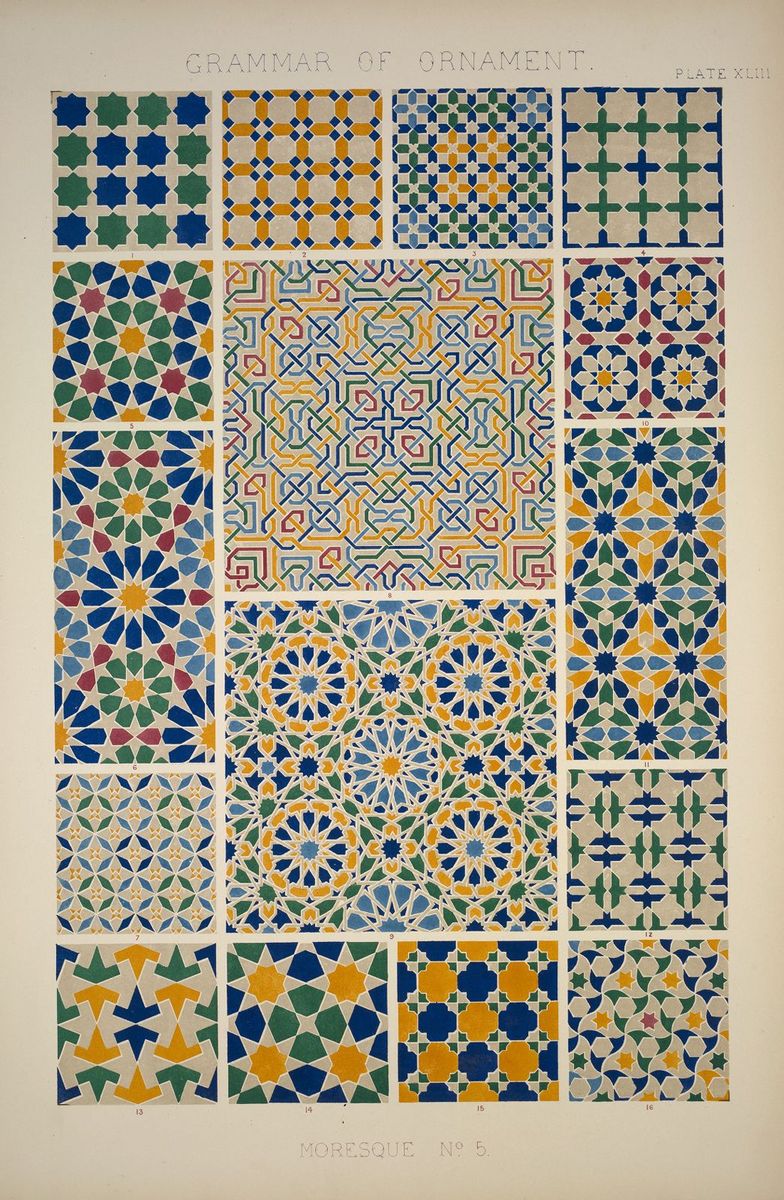
Moresque ornament from the Alhambra no. 5: Mosaics. Lithograph, 1856. The New York Public Library -
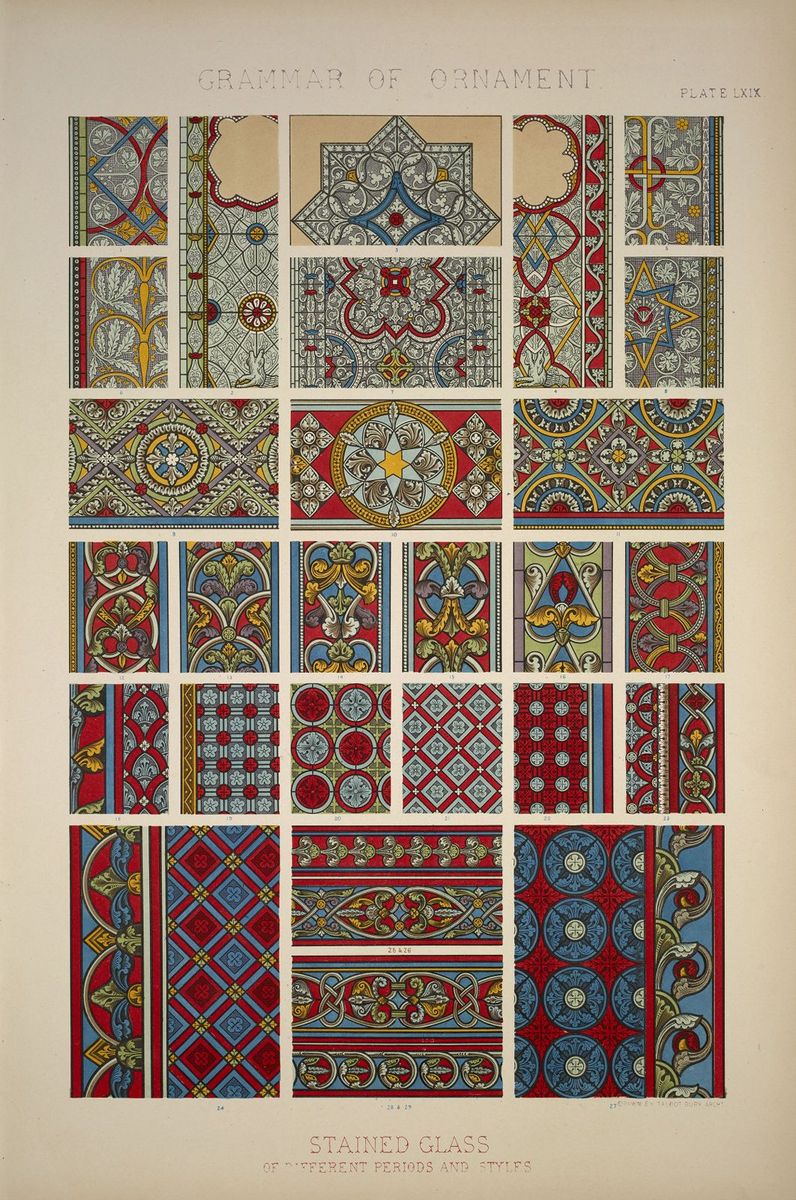
Medieval Ornament no. 4: Stained glass of various periods. Lithograph, 1856. The New York Public Library -
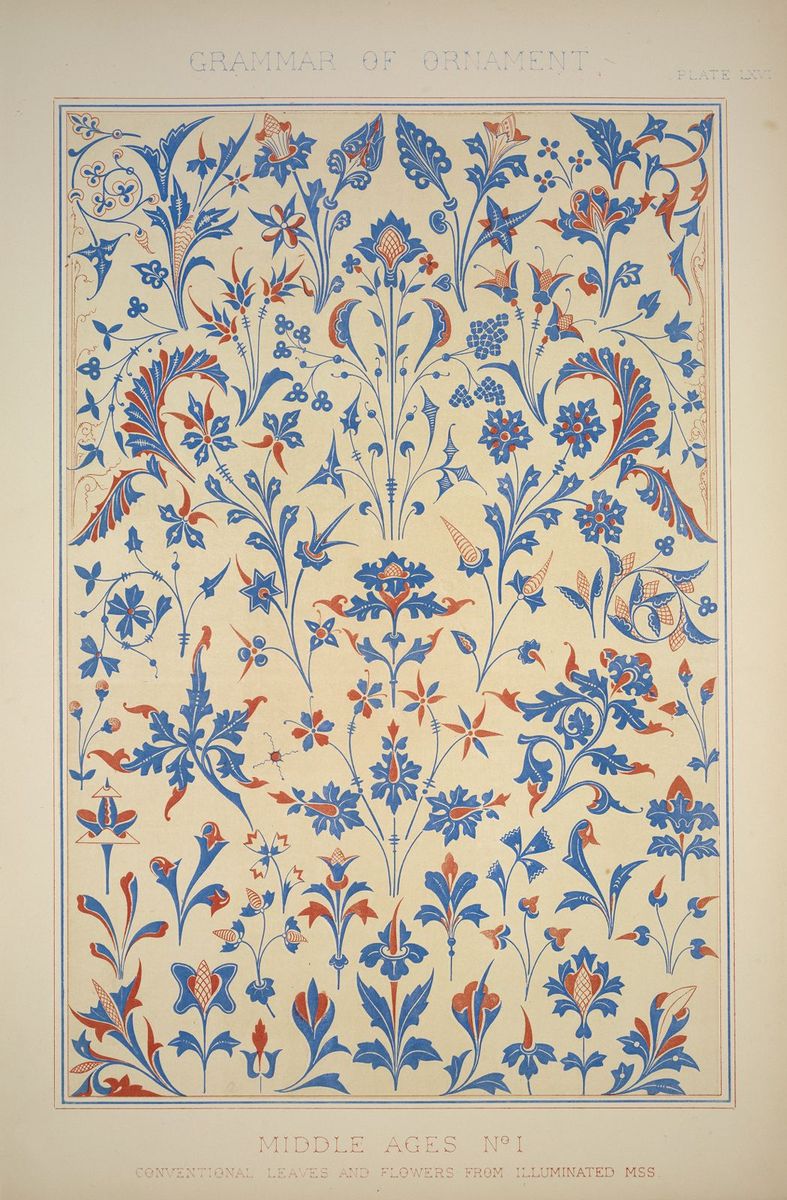
Medieval Ornament no. 1: Conventional leaves and flowers from illuminated manuscript, Lithograph, 1856. The New York Public Library -
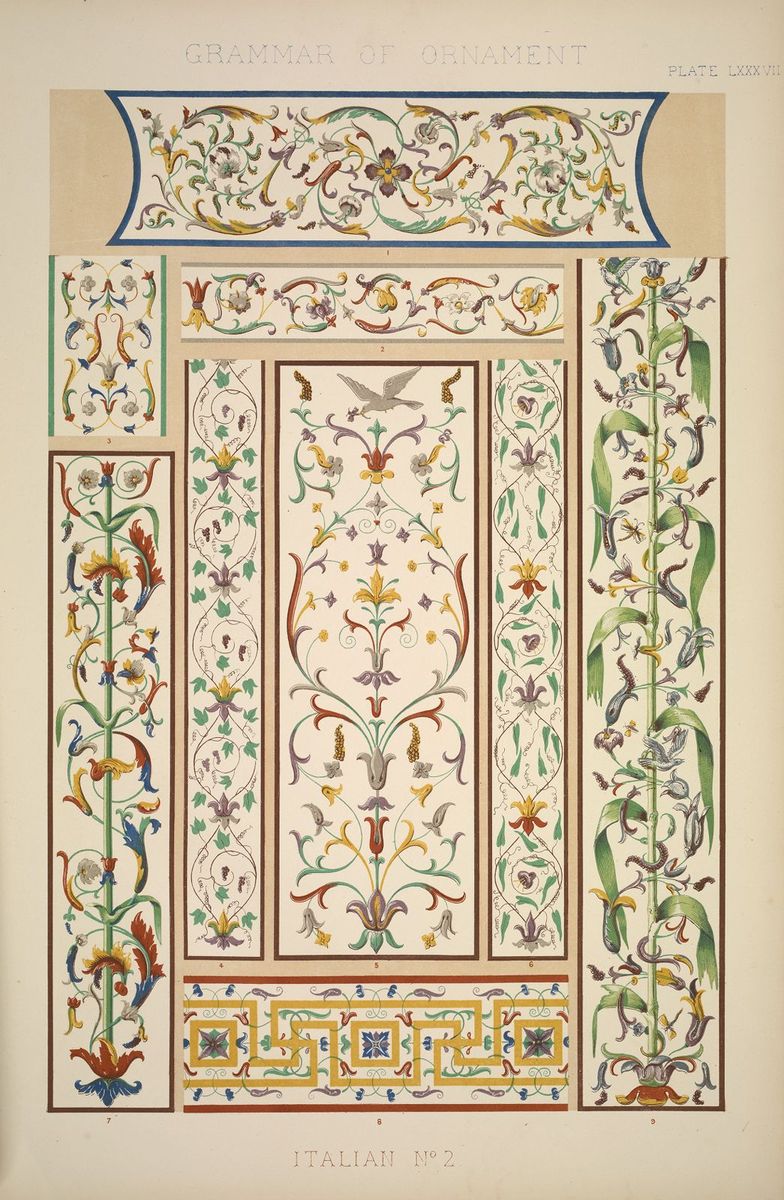
Italian Ornament no. 2: Ornaments from the Palazzo Ducale, Mantua. Lithograph, 1856. The New York Public Library -
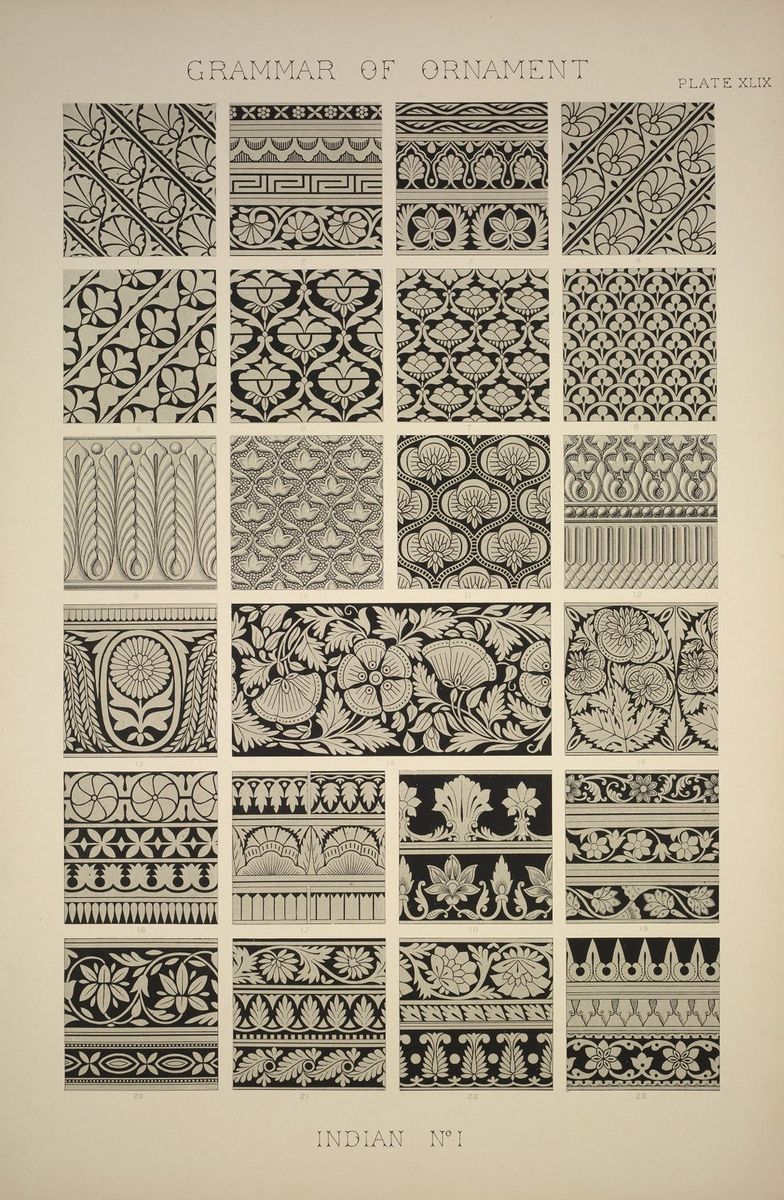
Indian Ornament no. 1: Ornaments from metal work from the exhibitions of 1851, Lithograph, 1856. The New York Public Library -
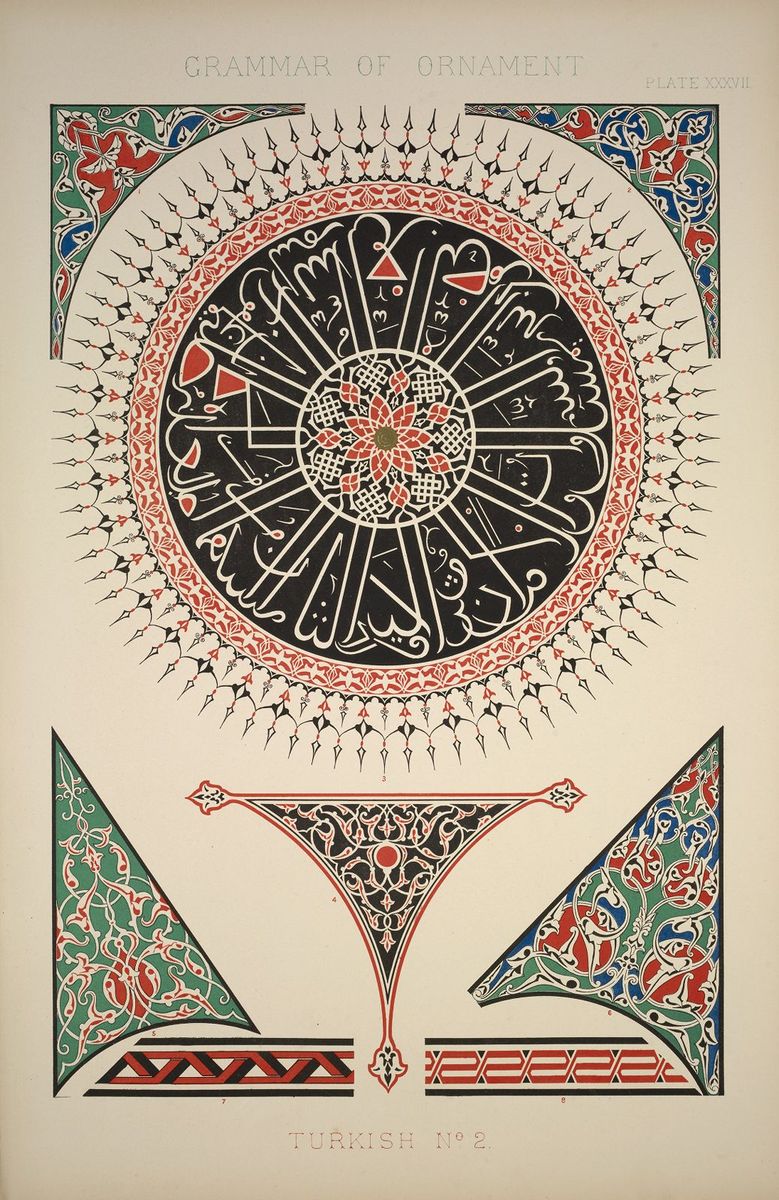
Turkish no 2: Painted ornaments from the Mosque of Soliman in Constantinople. Lithograph, 1856. The New York Public Library -
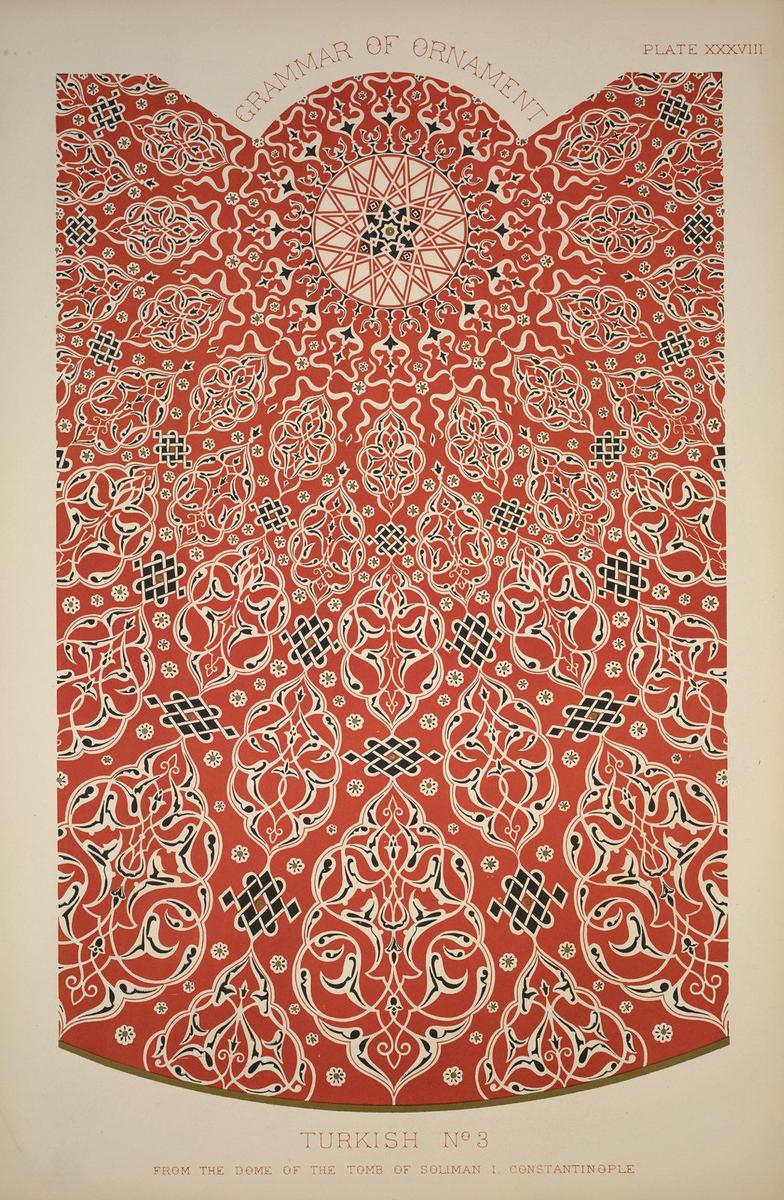
Turkish no. 3: Decoration of the dome of the tomb of Soliman I. in Constantinople. Lithograph, 1856. The New York Public Library -
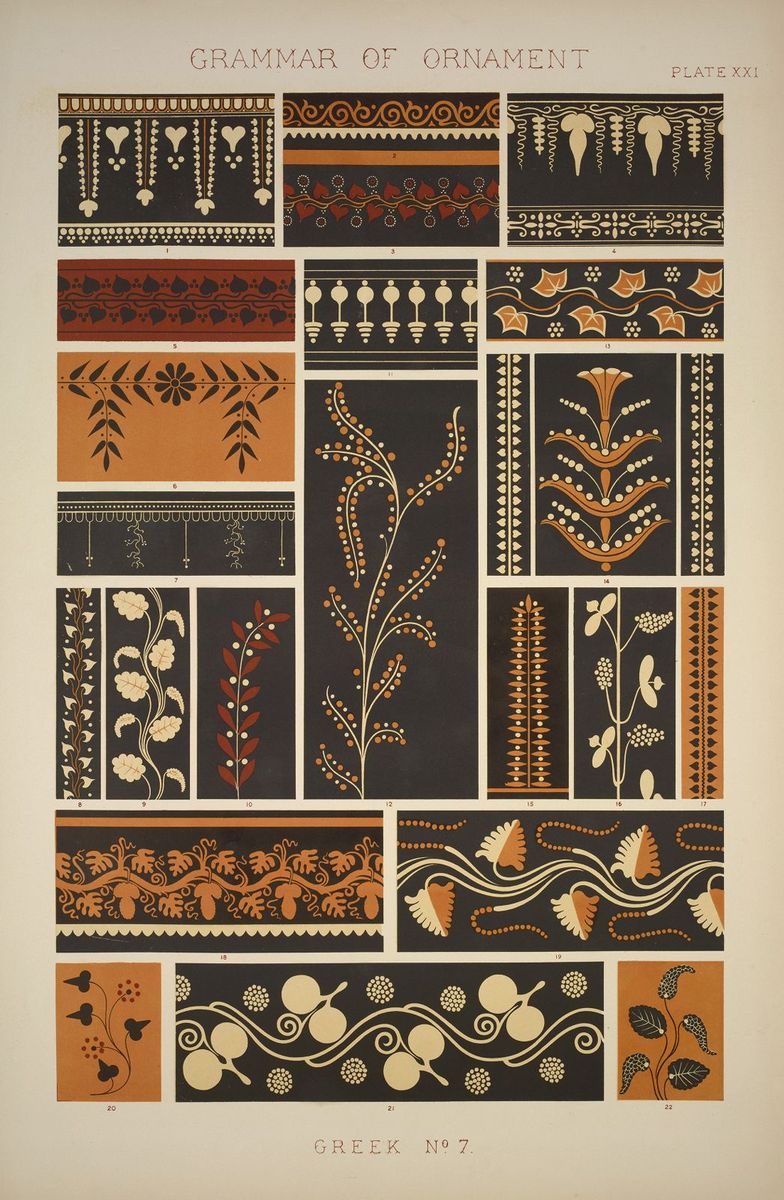
Greek no. 7: Ornaments from Greek and Etruscan vases in the British Museum and the Louvre. Lithograph, 1856. The New York Public Library -
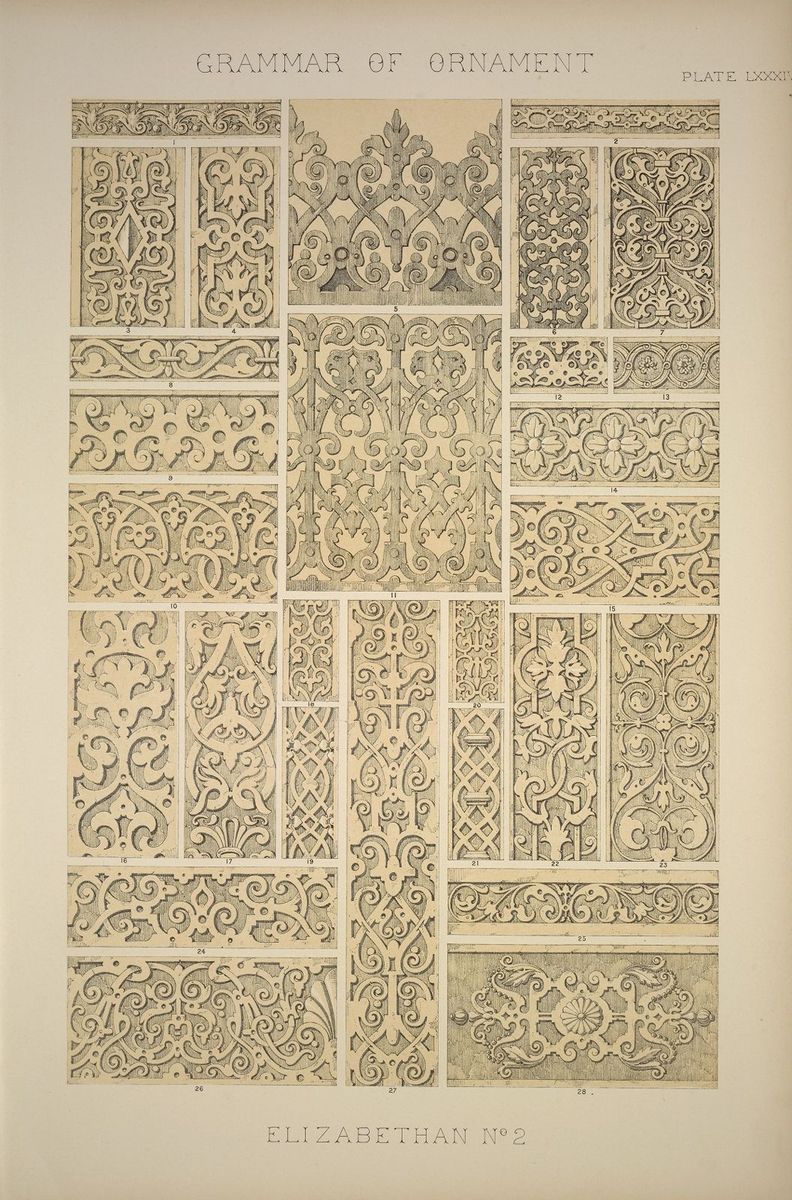
Elizabethan Ornament no. 2: Various ornaments in relief from the time of Henry VIII to that of Charles II. Lithograph, 1856. The New York Public Library -
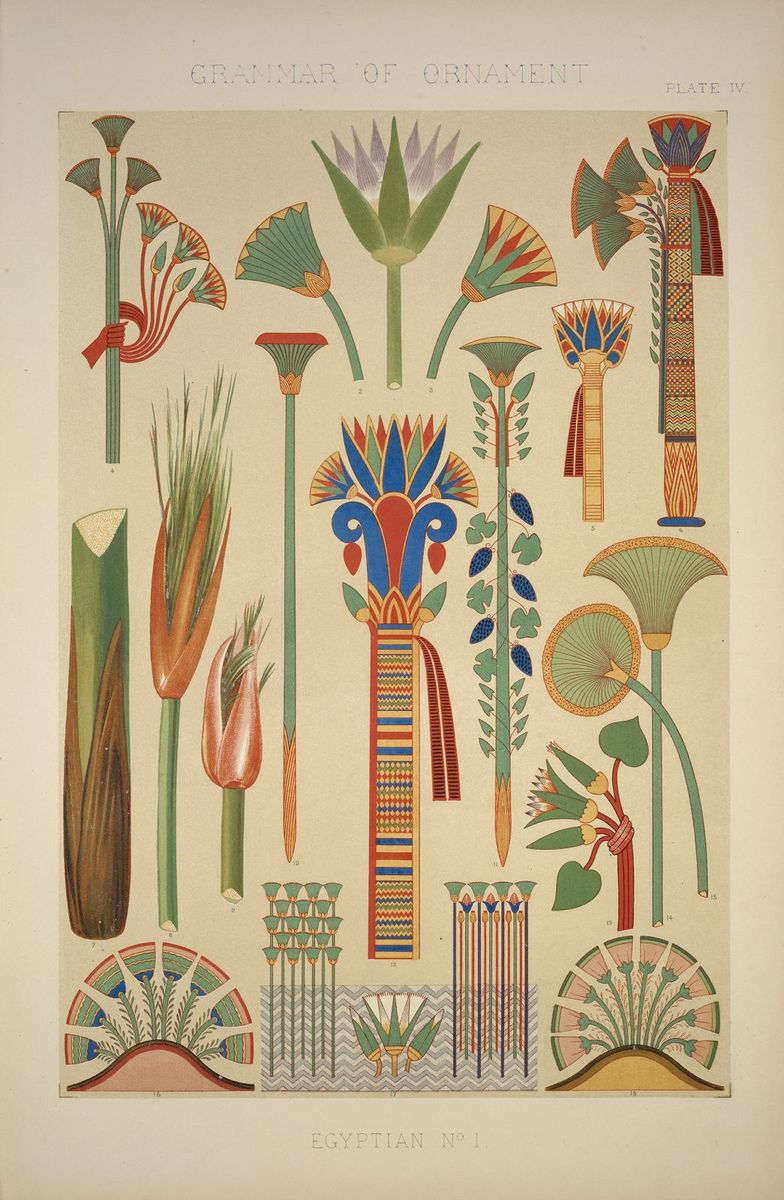
Egyptian no. 2: the lotus and papyrus, with feathers and palm branches. Lithograph, 1856. The New York Public Library -
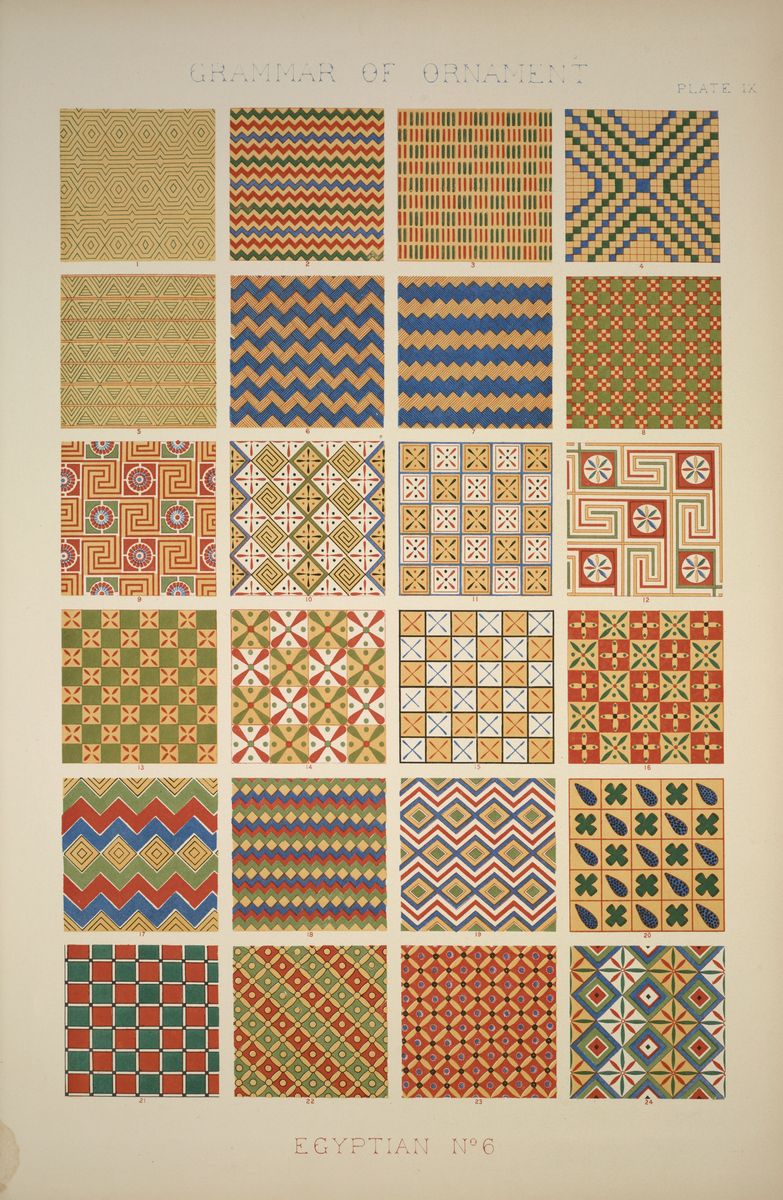
Egyptian no. 6: geometrical ornaments from ceilings of tombs. Lithograph, 1856. The New York Public Library -
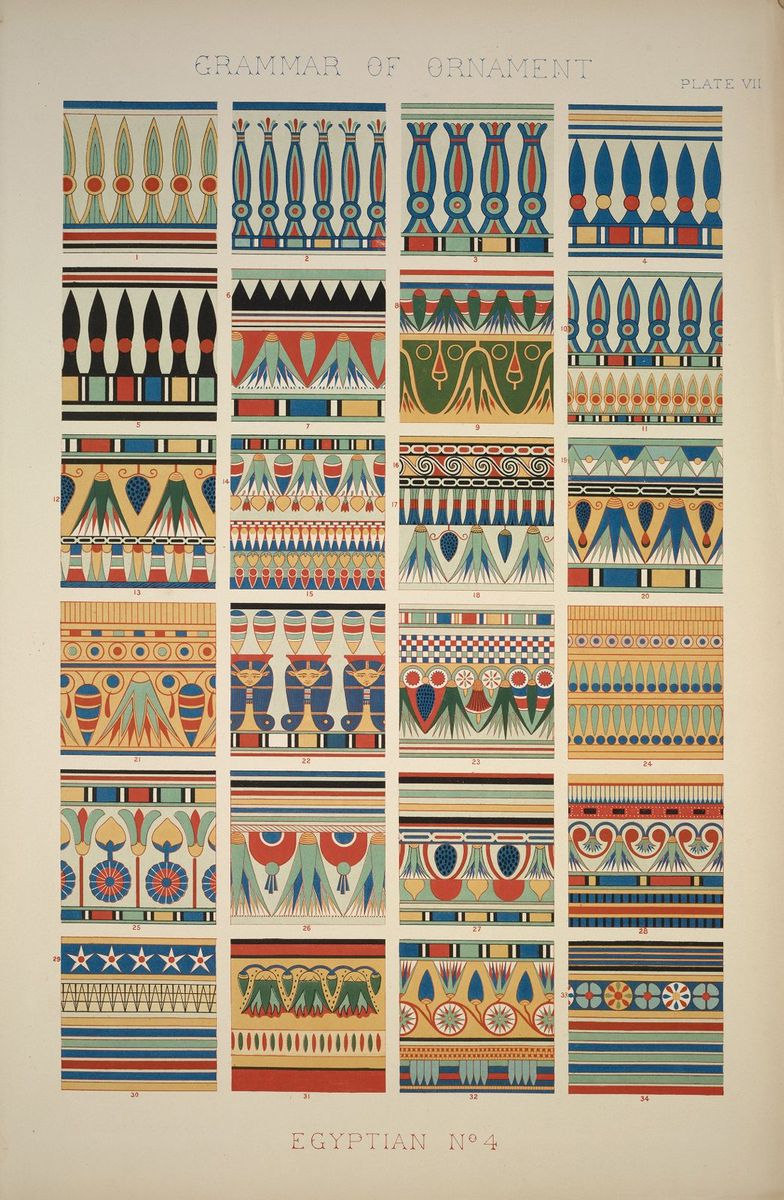
Egyptian no. 4: various cornices, formed by the pendant lotus, Lithograph, 1856. The New York Public Library -
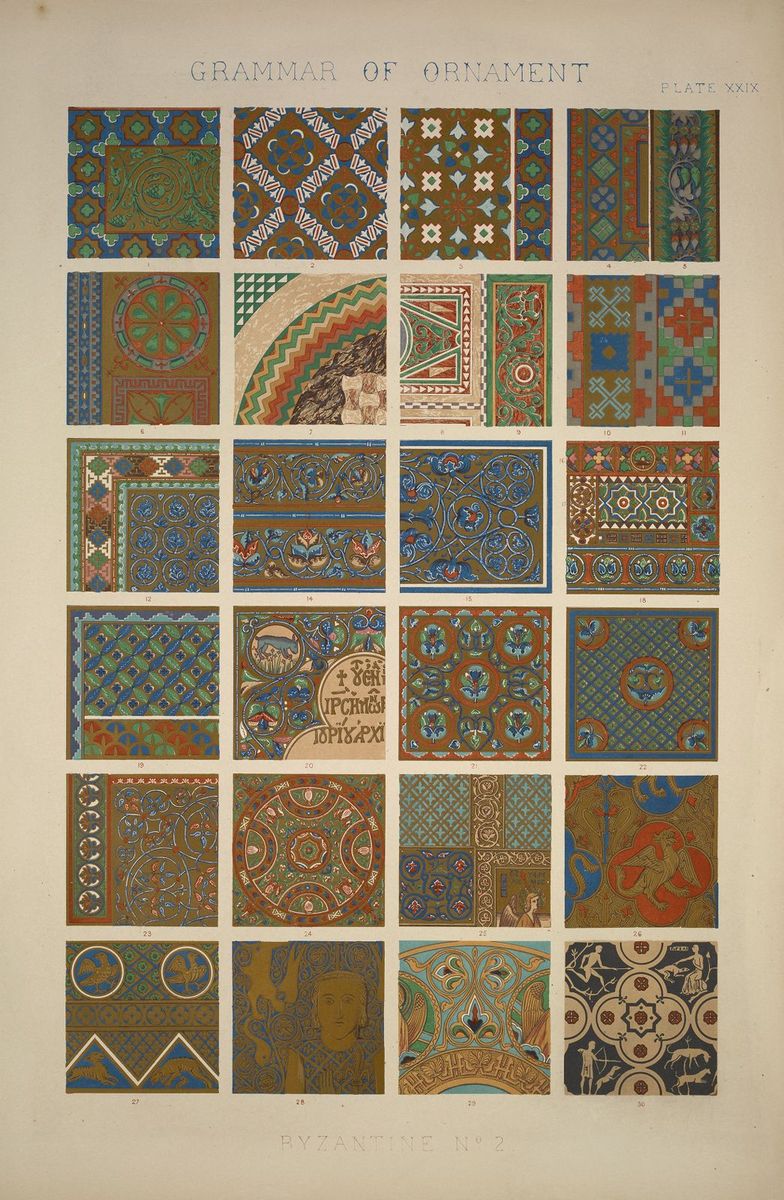
Byzantine no. 2: Painted Byzantine ornaments. Lithograph, 1856. The New York Public Library -
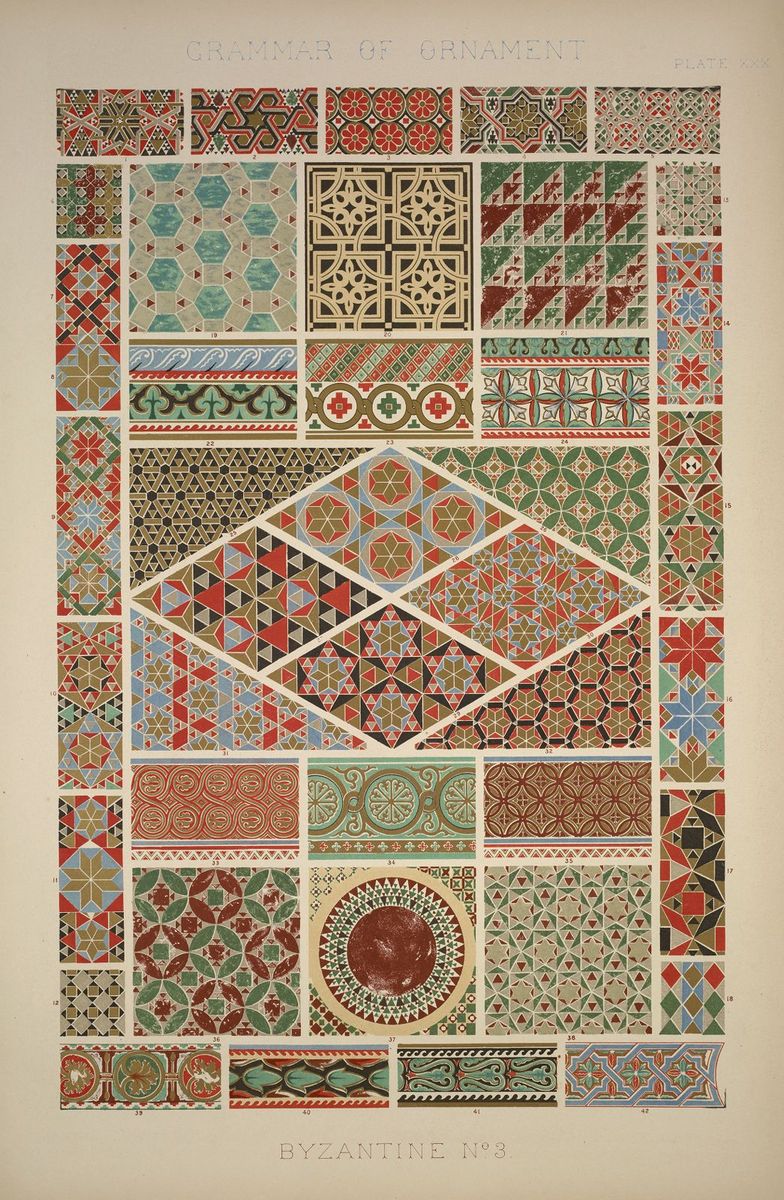
Byzantine no. 3: Mosaics. Lithograph, 1856. The New York Public Library -
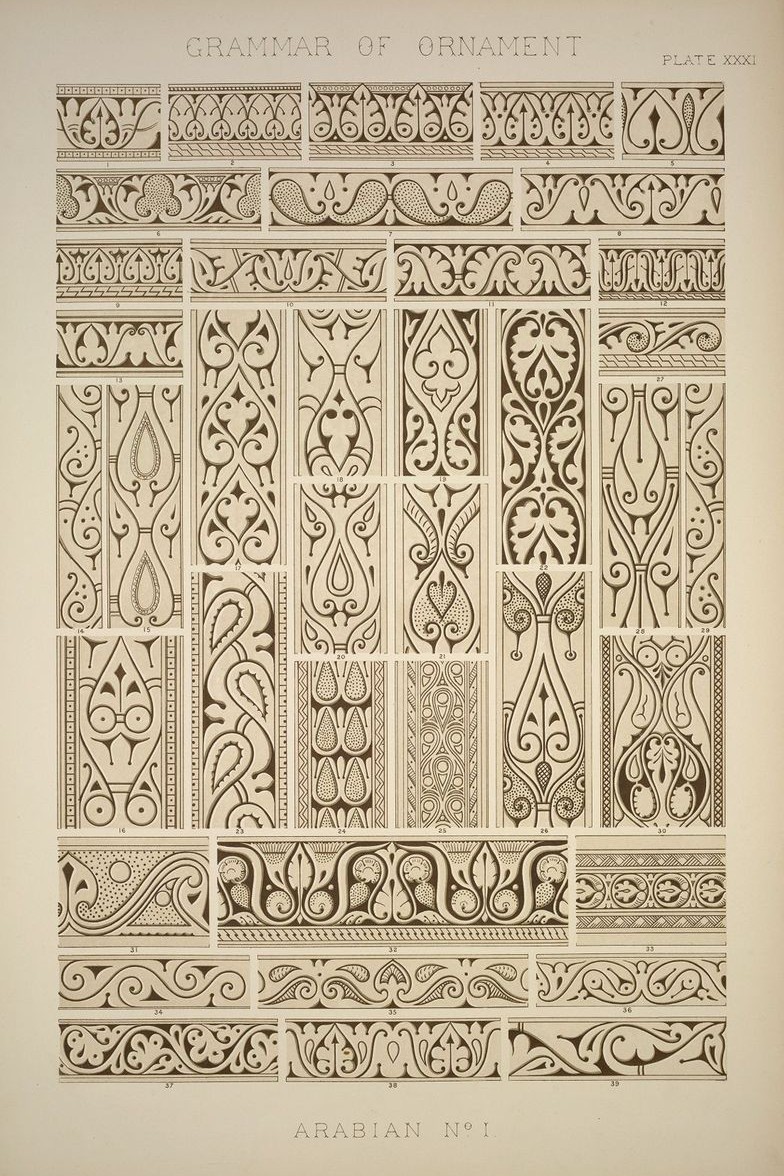
Arabian no. 1: Arabian ornaments from the ninth century from Cairo. Lithograph, 1856. The New York Public Library -
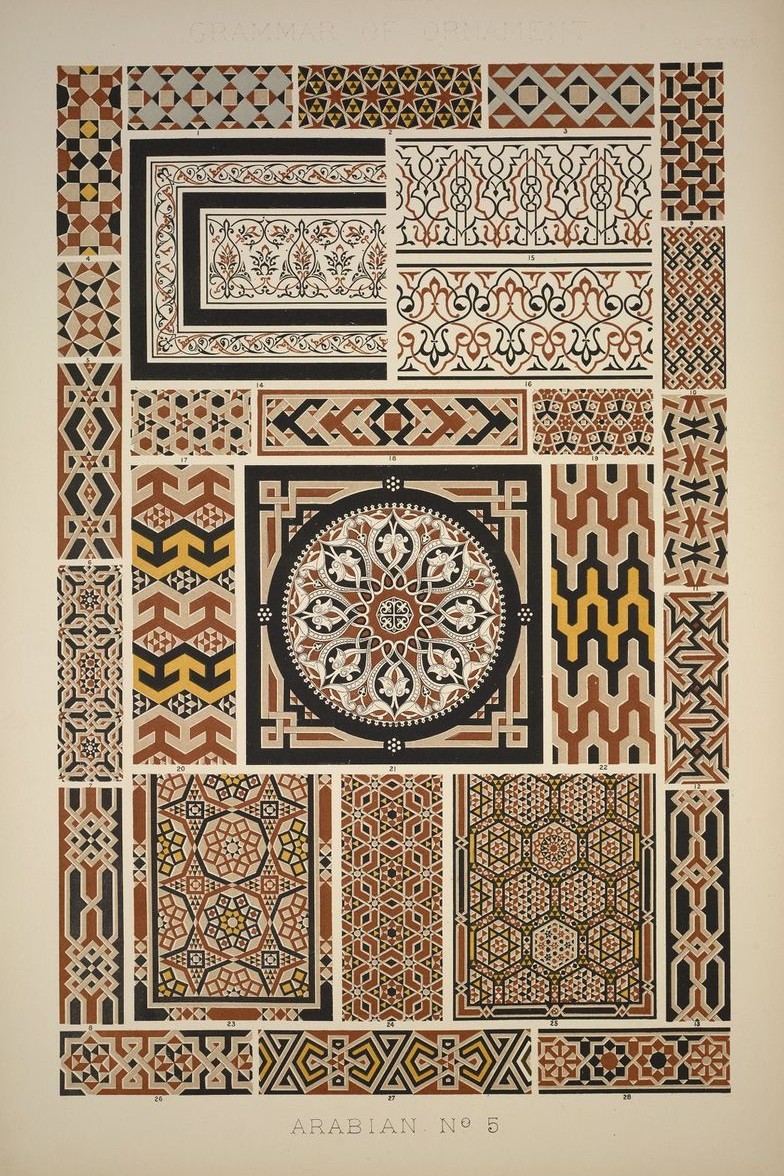
Arabian no. 5: Mosaics from walls and pavements from houses in Cairo, Lithograph, 1856. The New York Public Library -
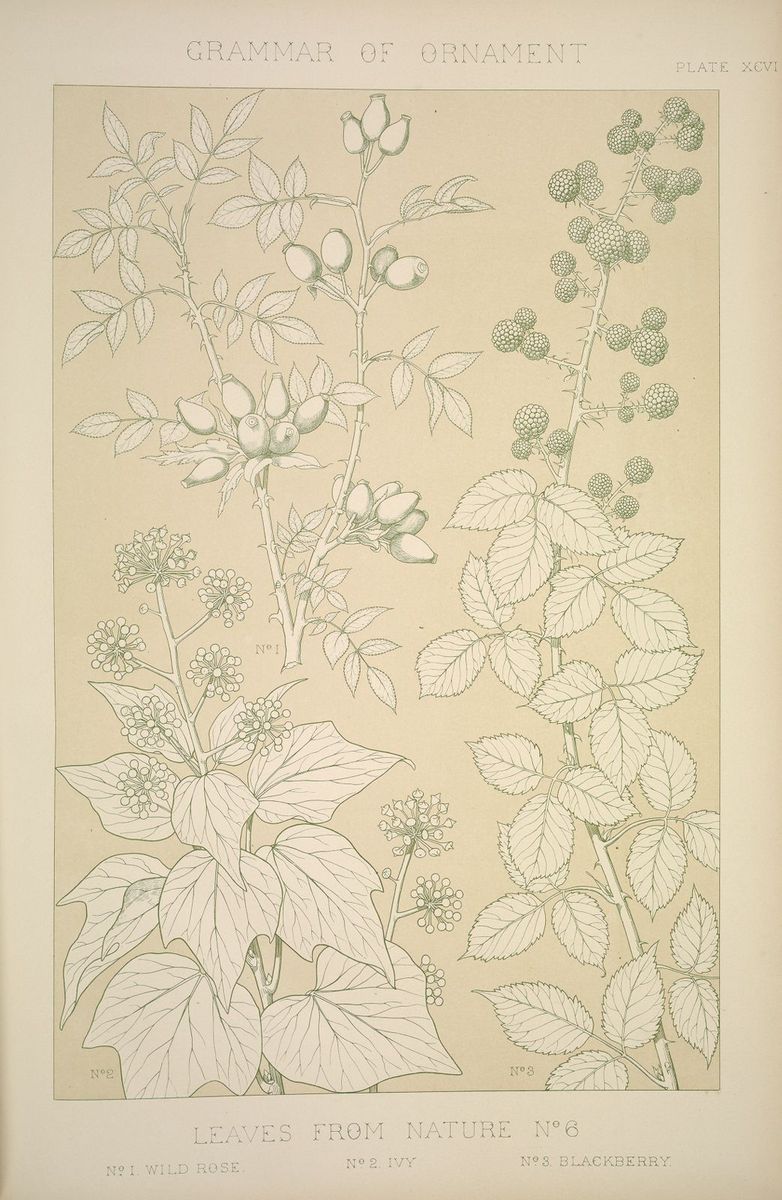
Leaves and flowers from nature ornament no. 6: Wild rose, Ivy and blackberry. Lithograph, 1856. The New York Public Library. -
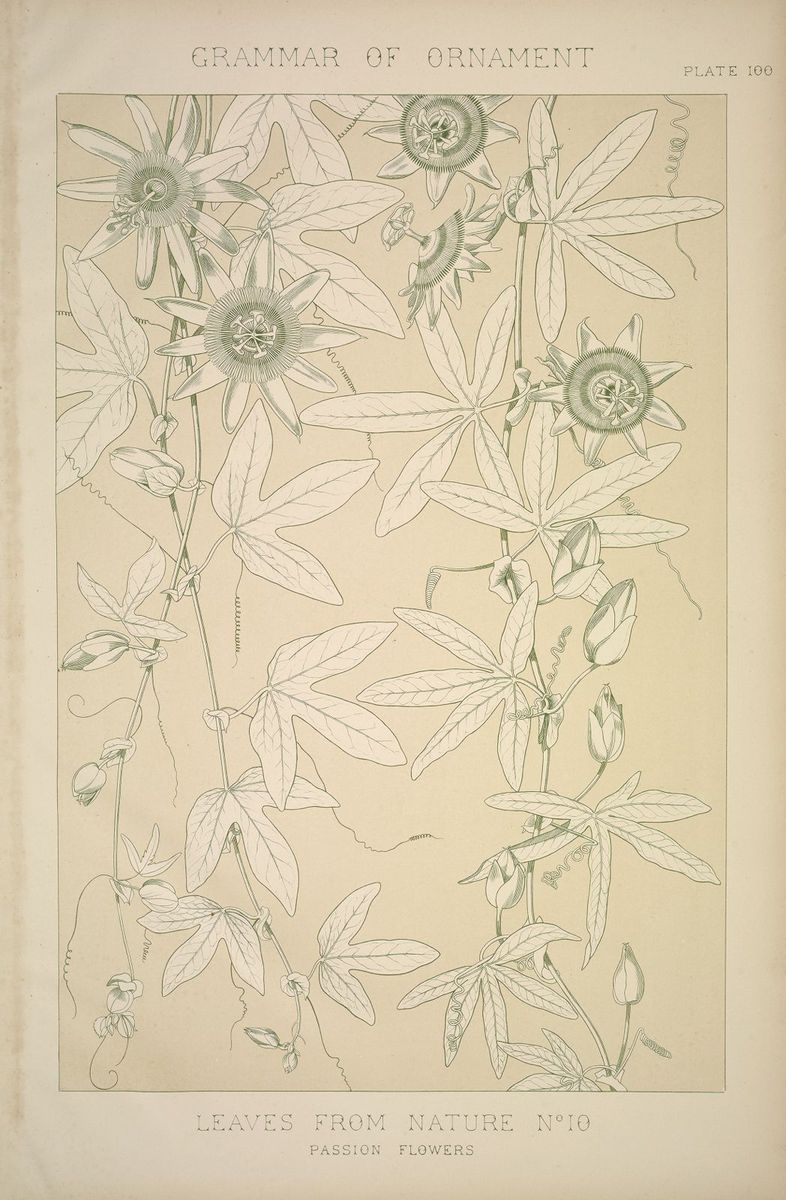
Passion flowers and leaves from nature ornament no. 10: Passion flowers. Lithograph, 1856. The New York Public Library -
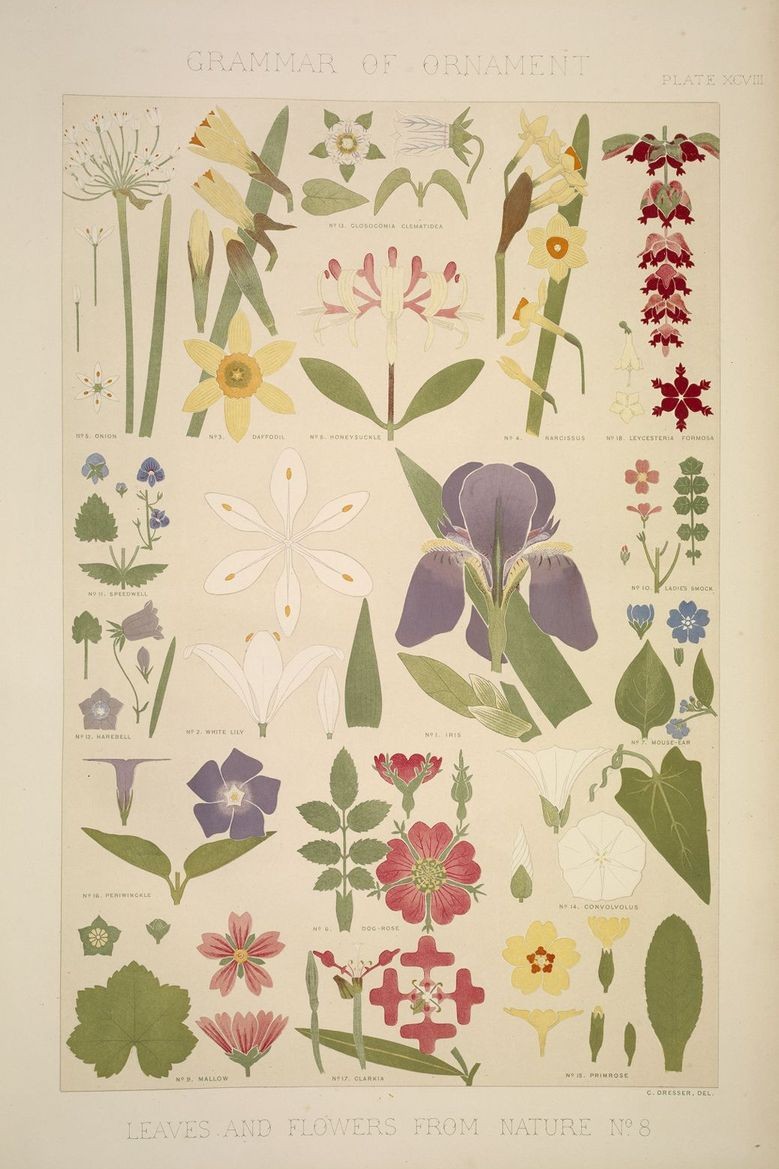
Leaves and Flowers from Nature Ornament no. 8: Various flowers in plan and elevations Lithograph, 1856. The New York Public Library


