
Projects / Vintage Inspiration / Charcoal Figure Drawings by Pierre Paul Prud'hon, 19th century
Charcoal Figure Drawings by Pierre Paul Prud'hon, 19th century
Pierre Paul Prud'hon (1758–1823) was a French draftsman and painter who bridged Neoclassicalism and Romanticism.
Although most well-known for his naturalistic paintings at the time, he left more than 100 figure drawings in charcoal after his death. They were most likely made for his own pleasure, for his students, or possibly by Constance Mayer. These astonishing charcoal studies use high contrast and create a soft, romantic feel. They are frequently used as reference photos for artists learning the figure -- I was introduced to Prud'hon by an art teacher. His figure drawings are scattered across museums. Here, I have collected just a few for artists to reference in their own figure studies. These ones are, as far as I can tell, in the public domain. Artists or teachers who are printing the images may want to visit the linked sources, where they can download most of the images in higher resolutions.
Artists may also be interested in one of his few charcoal landscapes here (not in the public domain).
Scroll down for a brief biography.
-
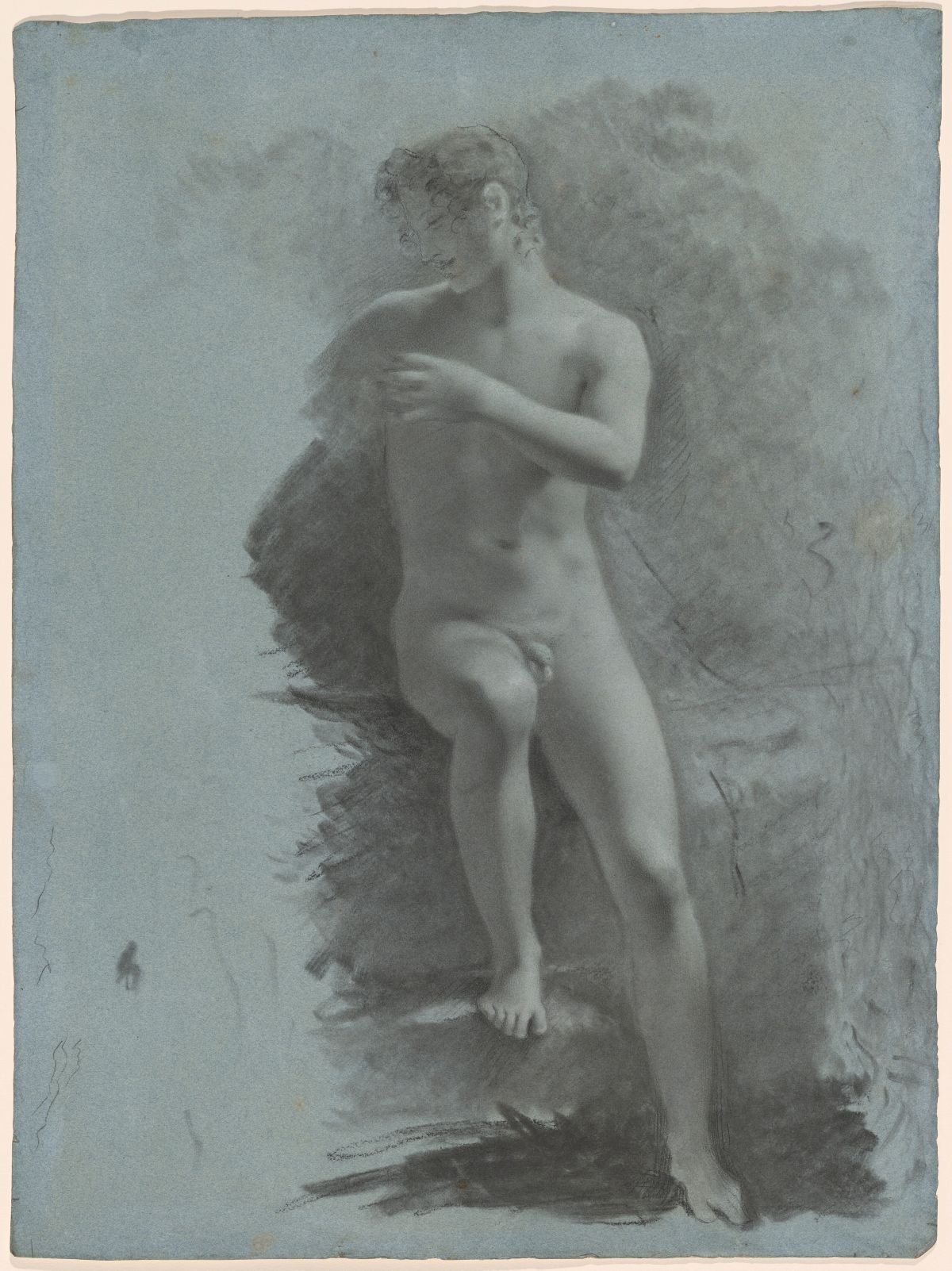
Pierre Paul Prud'hon, Adonis, ca. 1810–1812. Black chalk with white chalk heightening on blue paper. National Gallery of Art. -
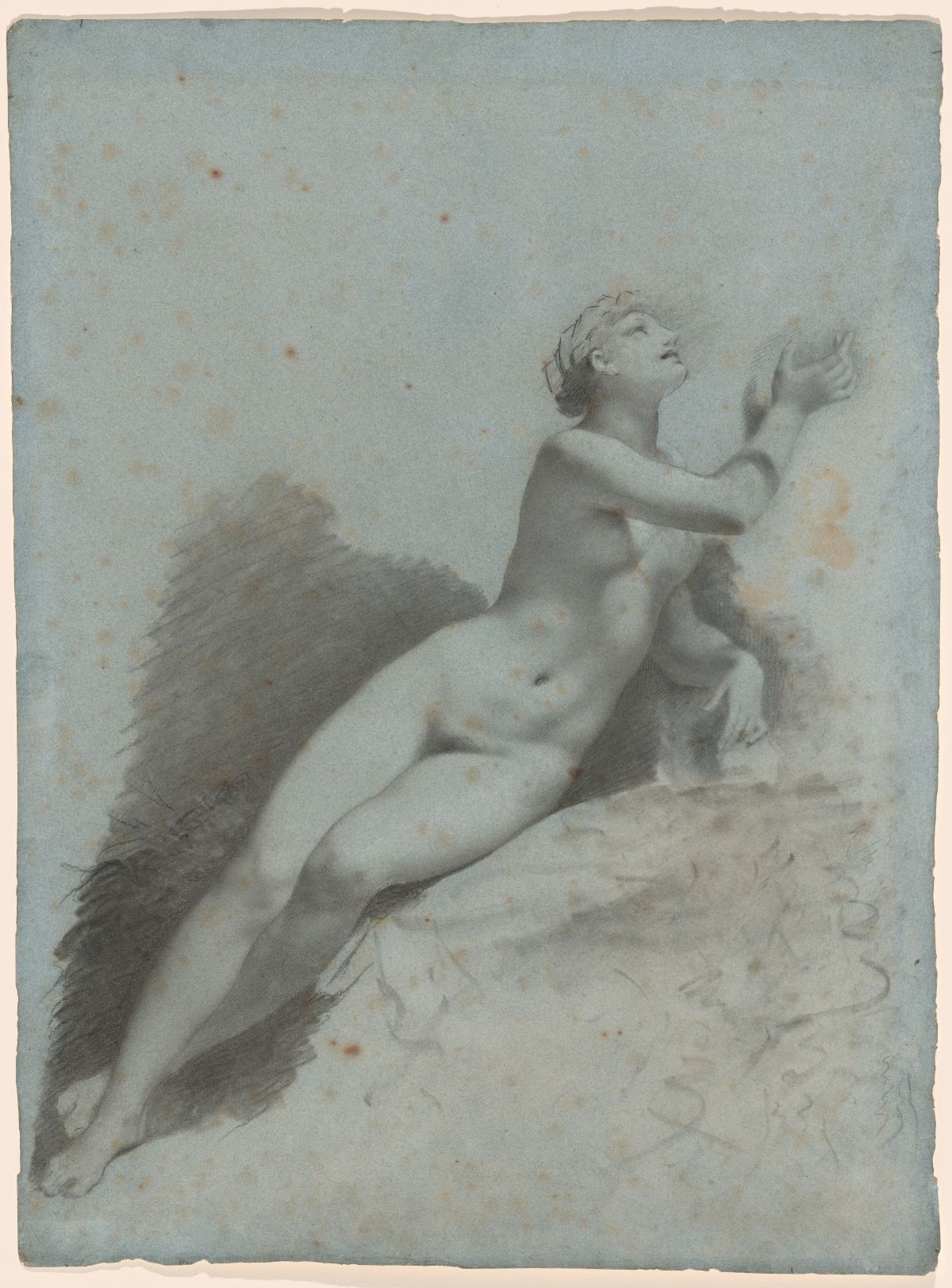
Pierre Paul Prud'hon, Venus, ca. 1810–1812. Black chalk with white chalk heightening on blue-gray paper. National Gallery of Art. -
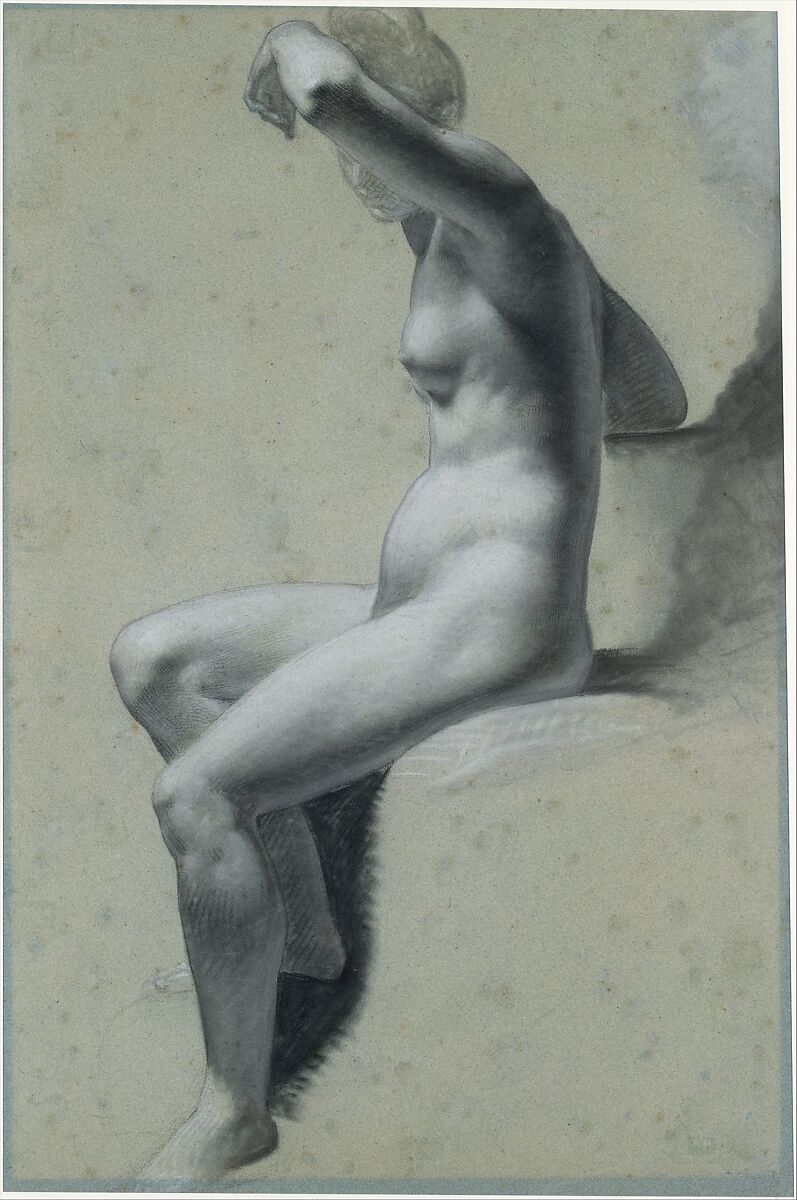
Pierre Paul Prud'hon, Seated Female Nude, 1800s. Black and white chalk on blue paper. The Met Collection -
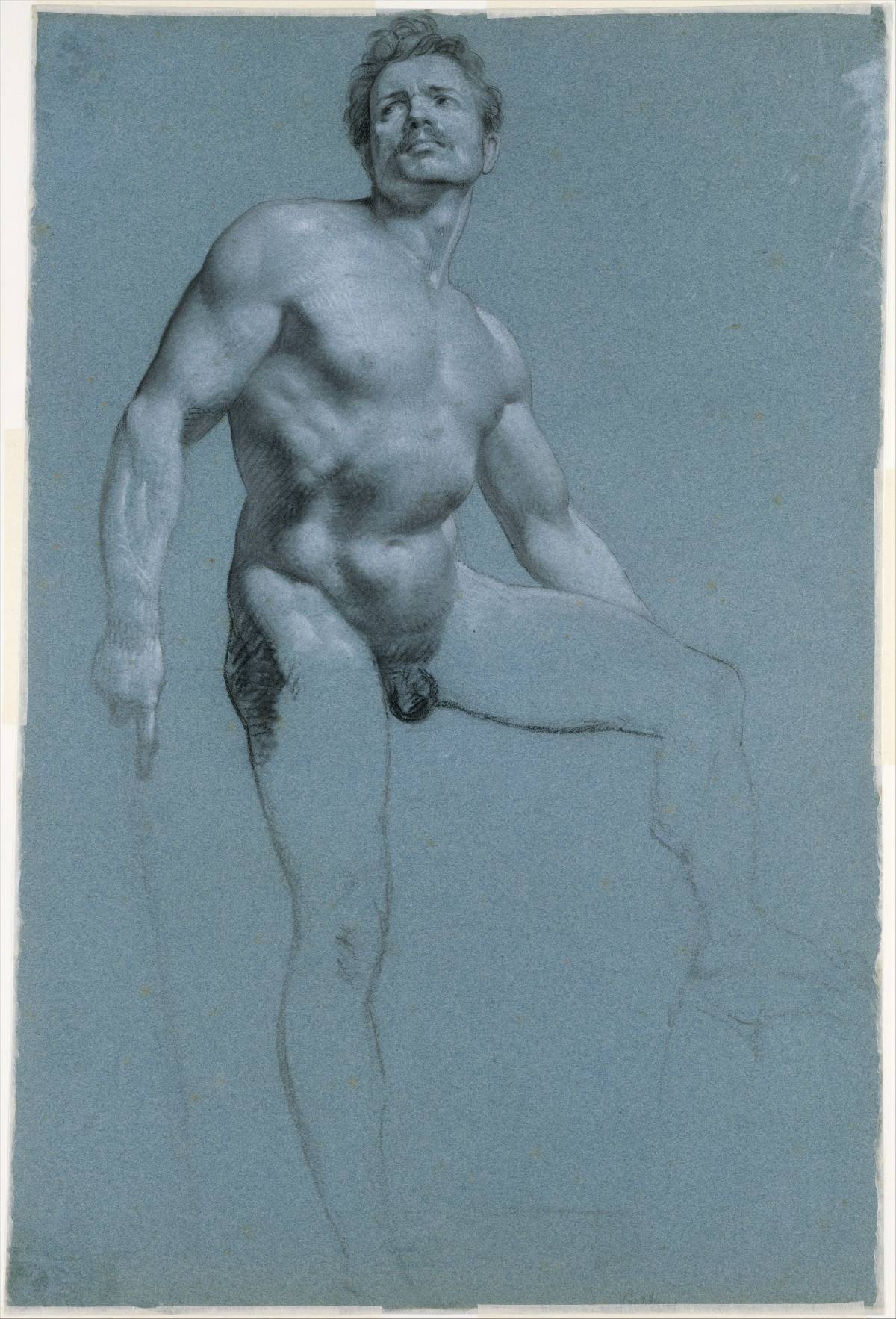
Pierre Paul Prud'hon, Standing Male Nude, 1800s. Black and white chalk on blue paper. The Met Collection -
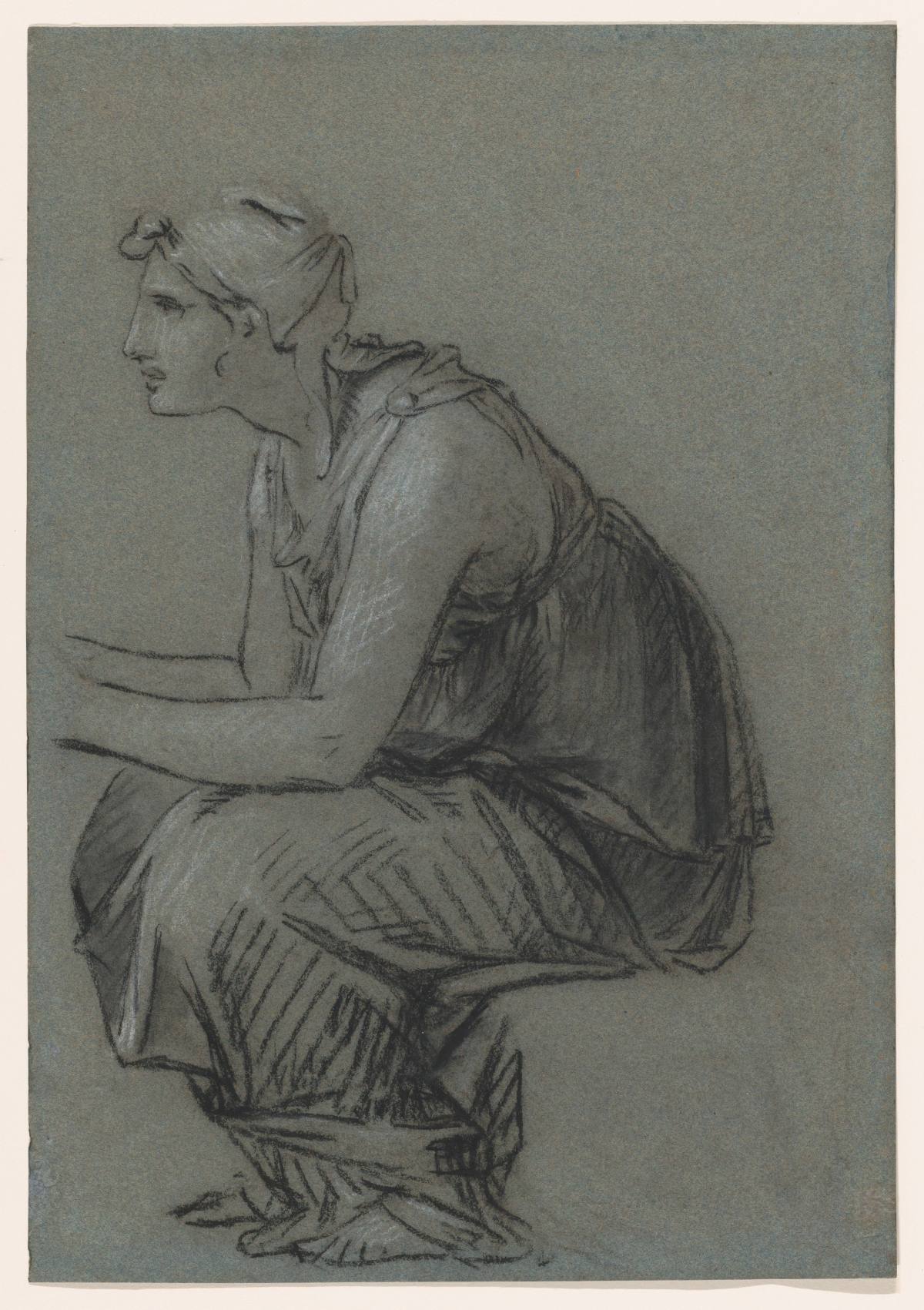
Pierre Paul Prud'hon, Study for Astyanax's Nurse, 1812. Black and white chalk on blue paper. The Met Collection -
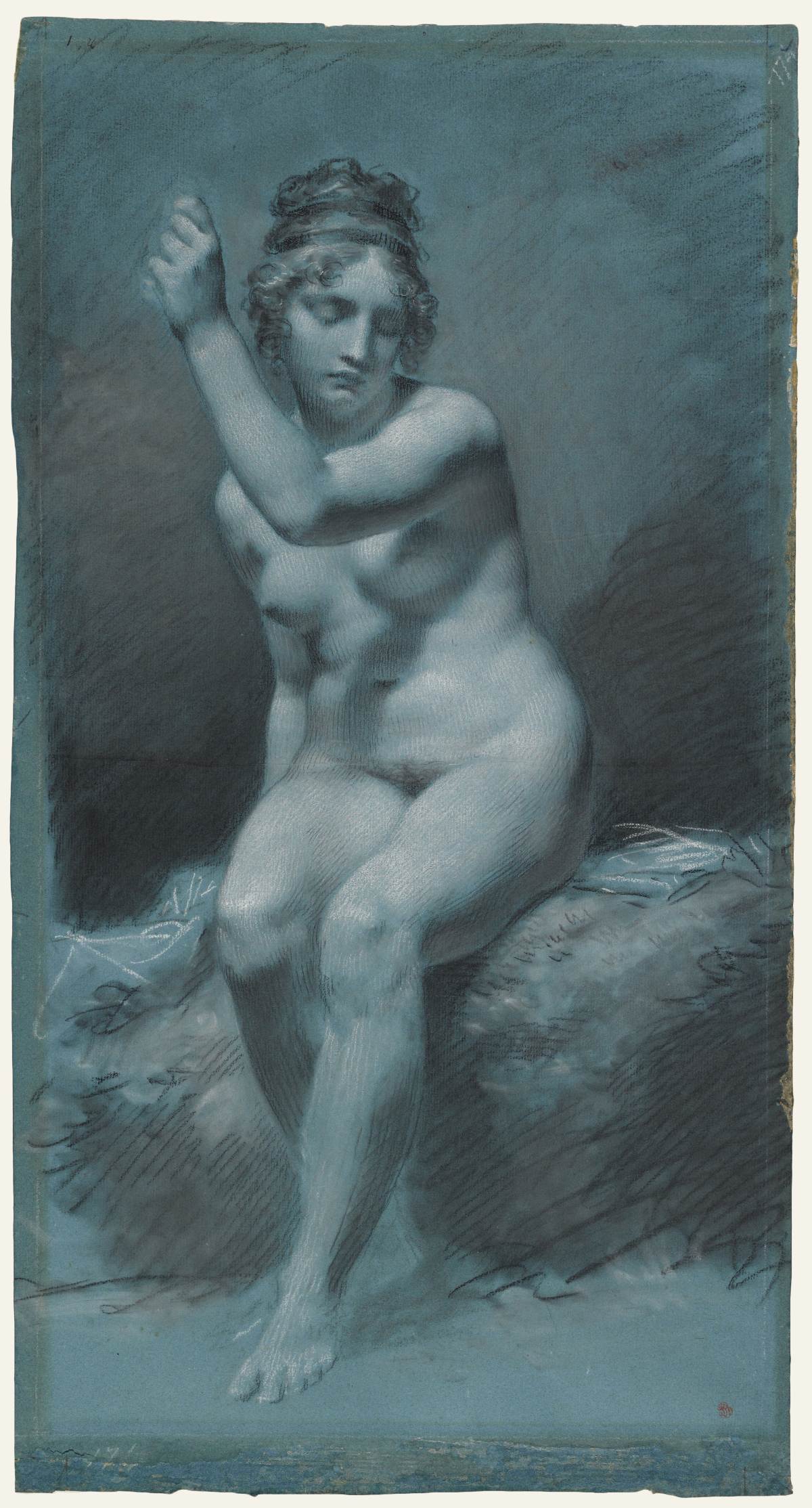
Pierre Paul Prud'hon, Study of a Female Nude, about 1800. The Getty Museum Collection. The Getty Museum Collection. -
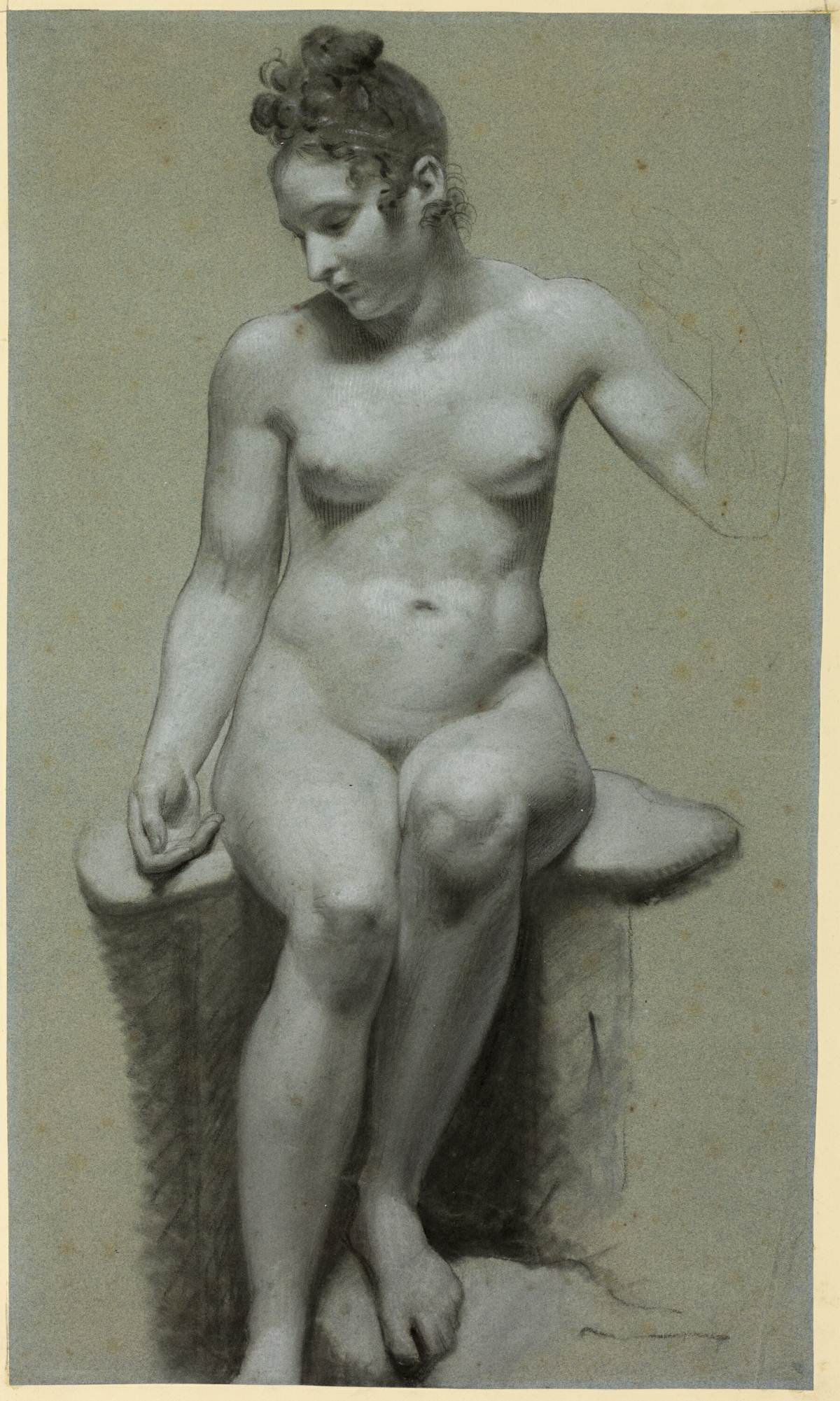
Pierre Paul Prud'hon, Seated Female Nude, ca. 1810–1821. Black and white chalks with stumping on blue laid paper. The Art Institute of Chicago. -
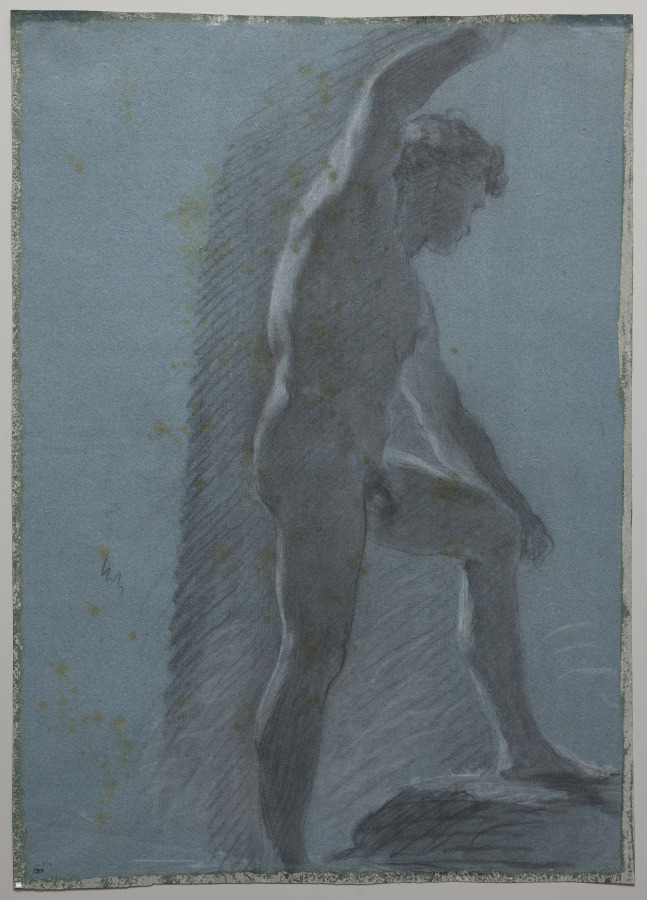
Pierre Paul Prud'hon, Study of a Male Nude, ca. 1810. Cleveland Museum of Art. -
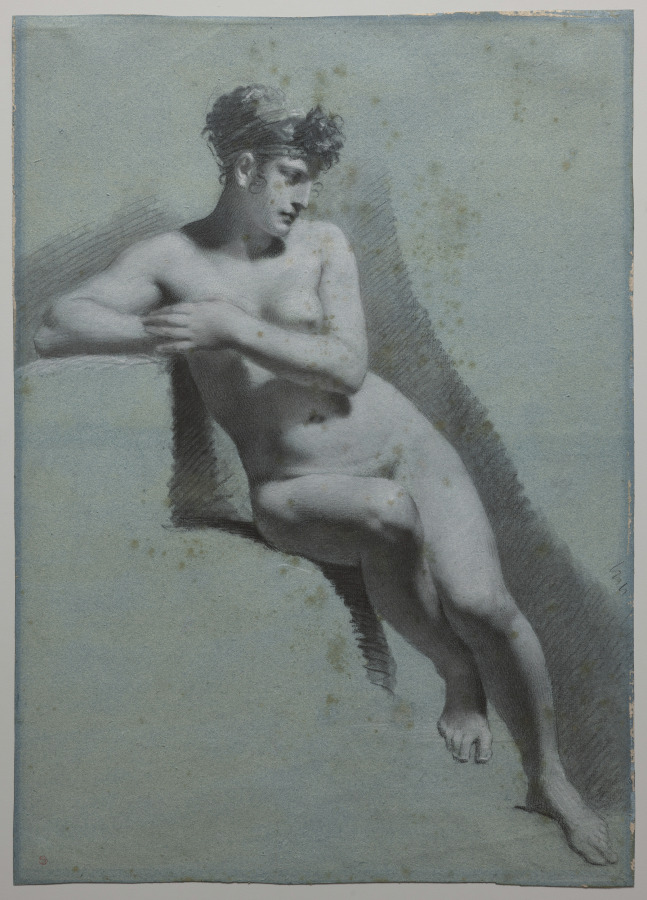
Pierre Paul Prud'hon, Study of a Nude Woman, Seated Looking to the Right, ca. 1810. Cleveland Museum of Art. -
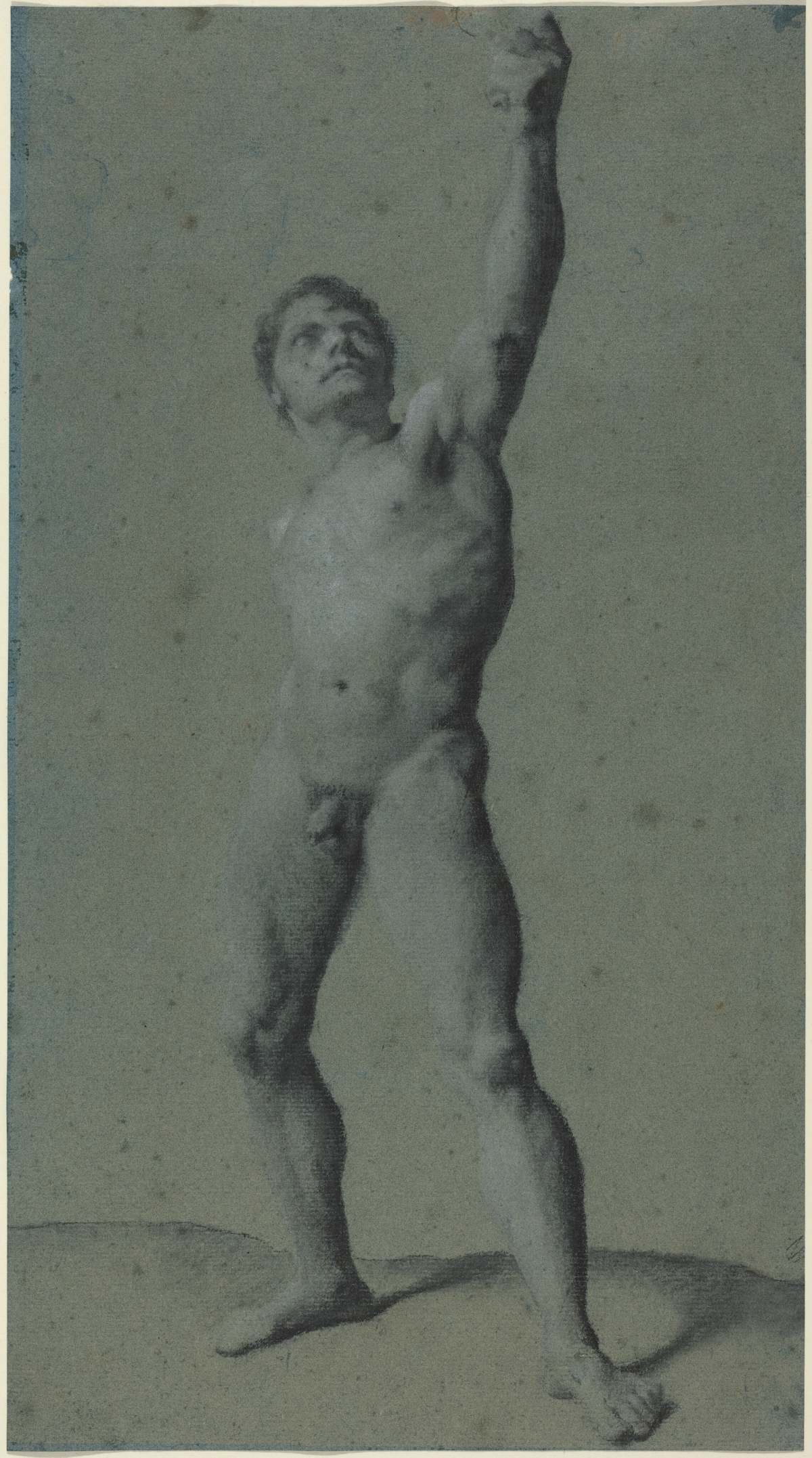
Pierre Paul Prud'hon, Male Nude Study, date unknown. Charcoal heightened with white chalk on blue paper. National Gallery of Art.
About Pierre Paul Prud'hon
At the age of sixteen, Prud'hon's local bishop spotted his talent and sponsored him for instruction at the École des Beaux-Arts in Dijon. According to the historian Rosalind Ormiston, he then lived a reclusive life in Rome for several years learning to draw -- but he avoiding instruction in painting to keep his own style. "I cannot nor do I want to see through the eyes of others…" he is quoted as saying, and he appeared to prefer drawing over painting for much of his career.
Prud'hon married at 19, reportedly unhappily, and had six children. From 1803 on, he partnered with the artist Constance Mayer, an astonishing artist in her own right who likely collaborated on many of his pieces and may have lost credit for some of her original paintings to his name. Some authorities now credit some of his paintings to both of them. They destroyed their letters, and we can assume, but do not know, if the relationship was sexual. Mayer was sixteen years younger than him. (Source: Daily Art Magazine)
But when Prud'hon's wife died in 1821, he vowed to her that he would not remarry. When Mayer heard this, she went to his studio and committed suicide. Prud'hon fell into a depression, worked on a dramatic composition of the cruxification, finished Mayer's last canvas, and organized an exhibit of her work. He died himself two years after Mayer and is buried in the same tomb. (Source: Adventures in the Print Trade)